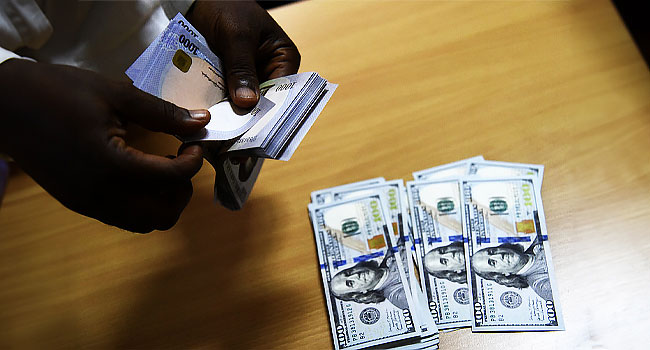
The Chairman of Dangote Group, Aliko Dangote, has projected that the naira could appreciate to ₦1,000 against the dollar before the end of the year, citing ongoing economic reforms and efforts to curb import dependence.
Dangote made the prediction on Tuesday at the launch of the Nigeria Industrial Policy in Abuja, an event attended by Vice President Kashim Shettima and other top government officials and industry leaders.
While the naira currently trades at about ₦1,300 to the dollar, Dangote expressed optimism that recent policy measures would further stabilise the currency.
“Today, the dollar is ₦1,340. Mr Vice-President, I can assure you that, with what I know, by blocking all this importation, the currency this year will be as low as ₦1,100 if we are lucky,” he said.
He added that strengthening the naira presents a delicate balance for the government, noting that a stronger currency could reduce inflation in an import-dependent economy but might also affect government revenue in naira terms.
“It’s a catch-22 situation where, now, if the naira gets stronger, it means that everything will go down. Everything will go down because we are an import-based country, which we shouldn’t be. What we should be doing is manufacturing all the things that we need,” Dangote stated.
The billionaire businessman emphasised the need to protect local investors through incentives, infrastructure support, and stable electricity supply, describing power as a major bottleneck to industrial growth.
According to him, industrial policy must be complemented by strong protection for domestic manufacturers to achieve the country’s goals of job creation and economic expansion.
Last week, the Chairman of First HoldCo, Femi Otedola, also projected that the naira could appreciate to ₦1,000/$1 before year-end, citing increased local refining capacity.
Speaking at the event, Vice President Shettima described the private sector as central to the success of the Nigeria Industrial Policy. He disclosed that Dangote Cement paid ₦900 billion in taxes in 2025, underscoring the sector’s contribution to government revenue.
The Nigeria Industrial Policy aims to boost value addition, deepen industrial linkages, and enhance export competitiveness as part of broader efforts to reposition the country as a manufacturing hub in Africa.