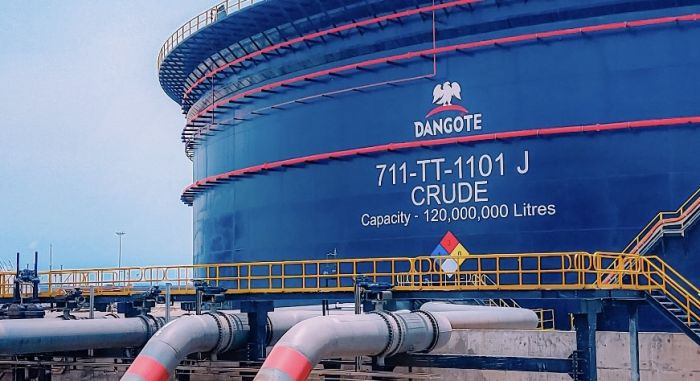
The Dangote Petroleum Refinery has received its second-ever crude oil cargo from Ghana, marking a strategic shift in its feedstock sourcing as the facility reduces purchases from Europe and prepares for extensive maintenance. Industry tracking data indicate that the latest shipment of Ghana’s Sankofa crude arrived in November, reinforcing expectations that the refinery will increasingly prioritise domestic and West African grades in the coming months.
According to new market intelligence from Kpler, crude deliveries to the refinery averaged about 380,000 barrels per day (kbd) between September and November roughly 30 per cent below the volumes seen during the July–August peak. The decline reflects recurrent outages and major maintenance activities, including a two-month shutdown of the Residue Fluid Catalytic Cracking (RFCC) unit that began on December 4, and a one-week outage of the Crude Distillation Unit (CDU) slated for late January.
Kpler reported that November receipts were dominated by Nigerian streams principally Bonny Light, followed by Amenam, Forcados, Utapate and Qua Iboe while Sankofa served as the only non-Nigerian cargo in the slate. “Looking ahead, we expect Dangote’s crude slate to remain primarily domestic, supplemented by smaller volumes from other West African producers or the United States,” the firm noted.
As crude intake slows, the refinery has sharply cut purchases from Europe, particularly from the North Sea and Mediterranean markets, leaving more room for regional West African grades. “Arrivals averaged ~380 kbd over September–November, roughly 180 kbd (30 per cent) below volumes purchased during the summer,” Kpler stated, attributing the reduction to ongoing operational constraints and imminent maintenance work.
The shift has begun to ripple through Nigeria’s downstream sector. With the RFCC unit offline until February, petrol production at the refinery is expected to fall to around 80,000 barrels per day—down from recent levels of 100,000–130,000 bpd. This tightening in domestic supply has triggered a significant increase in imports. Nigeria’s petrol imports nearly doubled month-on-month in November, reaching approximately 300,000 bpd, the highest inflow in 14 months, driven largely by increased pull from European refiners.
Kpler noted that overall Nigerian refinery runs are projected to fall from about 450 kbd in October to 320–350 kbd through December–February, before rebounding to potentially exceed 500 kbd by April 2026 once maintenance concludes.
Despite the disruptions, the Dangote refinery has assured Nigerians of steady fuel availability during the festive period and early 2026. Aliko Dangote, President and Chief Executive of Dangote Industries Limited, said the refinery will supply 1.5 billion litres of petrol monthly in December and January equivalent to 50 million litres per day before ramping up to 1.7 billion litres in February.
“In line with our commitment to national well-being, and consistent with our track record of ensuring a holiday season free of fuel scarcity, the Dangote Petroleum Refinery will supply 1.5 billion litres of PMS to the Nigerian market this month,” Dangote said. “We will supply another 1.5 billion litres in January and increase to 1.7 billion litres in February, which translates to about 60 million litres per day.”
As the refinery adjusts its operations and crude mix, Nigeria’s downstream market is preparing for a tight but managed supply window, with expectations of improved stability once major units return online early next year.