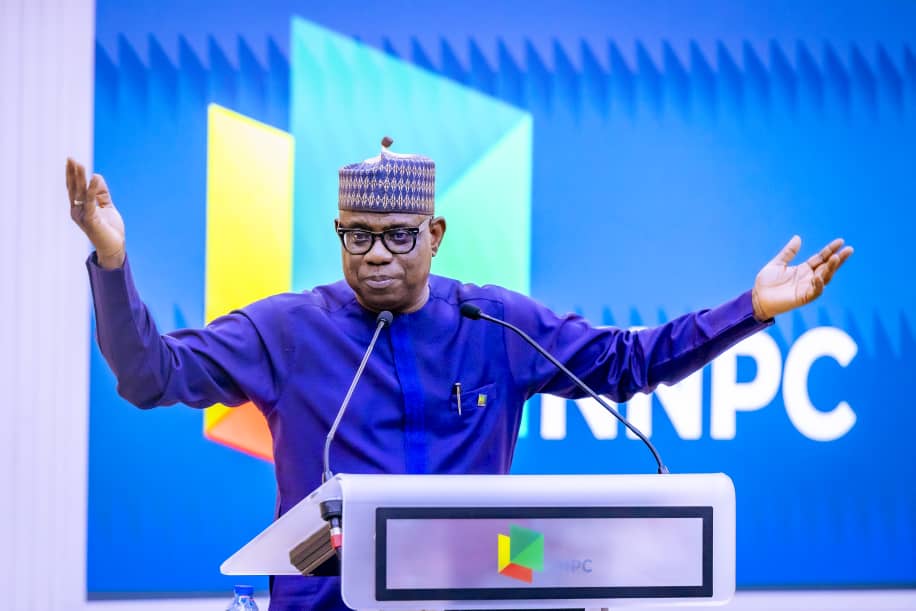
The Group Chief Executive Officer of Nigerian National Petroleum Company (NNPC) Limited, Bayo Ojulari, has assured Nigerians that the intensifying competition in the downstream petroleum sector will ultimately translate into tangible benefits for consumers, even though the market is currently experiencing transitional pressures.
Ojulari gave the assurance on Sunday while speaking with journalists after a meeting with President Bola Ahmed Tinubu at his Ikoyi, Lagos residence.
Competition brings short-term strain, long-term gains
Describing the current pressures in the downstream market as unavoidable, Ojulari said the shift towards a fully competitive, willing-buyer, willing-seller framework was bound to generate initial frictions, but would stabilise over time as market forces adjust.
According to him, sustained competition among operators would improve efficiency, pricing transparency, and service delivery, with consumers emerging as the ultimate winners.
“At the end of the day, Nigerians on the streets are going to be the beneficiaries,” Ojulari said. “Where there is healthy competition, the buyers are the ultimate beneficiaries.”
Market reforms reshaping the sector
Nigeria’s downstream petroleum sector has undergone significant changes following the removal of fuel subsidies and the liberalisation of pricing, developments that have increased private sector participation while reducing the dominant role previously played by state-backed pricing mechanisms.
While the transition has triggered price volatility and supply adjustments, industry analysts say competition could, over time, lead to more reliable supply chains, improved infrastructure investment, and cost efficiencies.
Ojulari acknowledged that the adjustment period has been challenging but stressed that the reforms were necessary to place the sector on a sustainable commercial footing.
Meeting with Tinubu
The NNPC GCEO explained that his visit to the president was primarily to brief him on the company’s end-of-year performance for 2025, while also outlining NNPC’s strategic priorities for 2026.
“I came to update Mr President about the end-of-2025 performance of NNPC and to discuss our strategic priorities for 2026,” he said.
He added that the meeting also provided an opportunity to express appreciation for President Tinubu’s support for the ongoing reforms within NNPC, particularly as the company continues to operate as a commercially oriented entity under the Petroleum Industry Act (PIA).
Business and energy outlook
From a business and energy desk perspective, Ojulari’s comments signal NNPC’s commitment to deeper market-driven reforms and competitive neutrality in the downstream space. Analysts note that a more competitive environment could encourage investment in refining, logistics, and retail infrastructure, while reducing long-term supply risks.
However, they caution that consumer gains will depend on regulatory stability, adequate infrastructure, and effective oversight to prevent market distortions.
As NNPC prepares its strategic roadmap for 2026, stakeholders will be watching closely to see how the national oil company balances commercial performance, market competition, and its broader role in supporting Nigeria’s energy security.