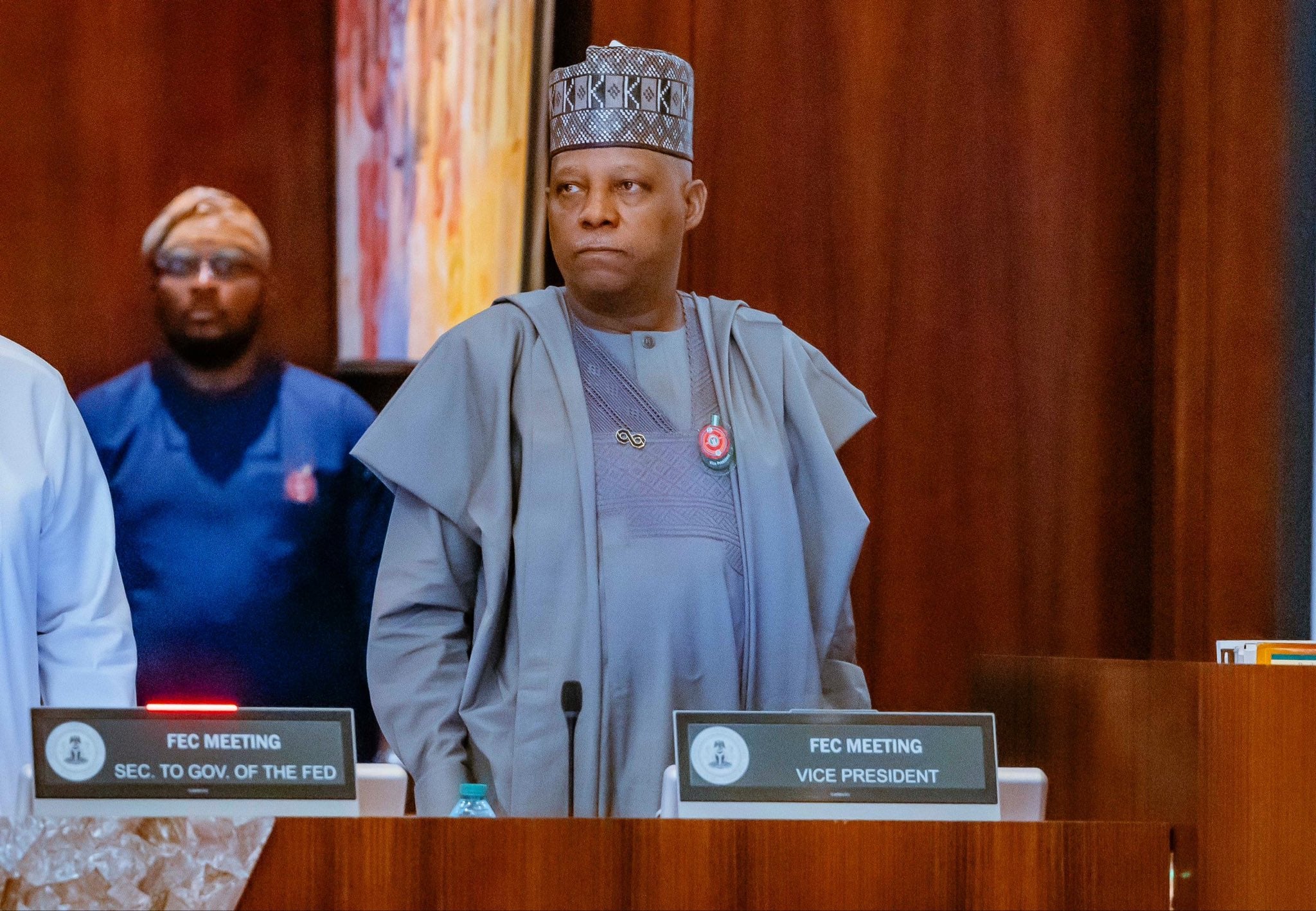
The Federation Accounts Allocation Committee (FAAC) has approved the disbursement of ₦7.895 billion for the operations of the National Economic Council (NEC) Secretariat for the 2025 fiscal year, according to documents obtained by Saturday PUNCH. The approval, drawn from the 0.5 per cent Stabilisation Fund Account as of December 2025, was authorised by the Chairman of the council and Vice President, Kashim Shettima.
The NEC Secretariat serves as the administrative and technical backbone of the council, coordinating meetings between the Federal Government and state governors, providing policy research and advisory support, monitoring implementation of resolutions, and facilitating intergovernmental collaboration on key economic and fiscal reforms across the country.
The documents indicate that the ₦7.895 billion represents the full allocation approved for the Secretariat’s operations for 2025, leaving a closing balance of ₦54.27 billion in the Stabilisation Fund. The transfer followed recommendations by the revenue-sharing committee during its statutory meeting.
The approval comes amid widespread complaints from Ministries, Departments, and Agencies (MDAs) over low capital releases and inadequate funding. Several MDAs, during the 2026 budget defence at the National Assembly, warned that insufficient 2025 allocations undermined project execution and service delivery.
For instance, the Federal Ministry of Health disclosed that only ₦36 million was released from its ₦218 billion capital budget, which weakened healthcare infrastructure and slowed critical interventions. Similarly, the Federal Ministry of Transportation received just about 1 per cent of its ₦256.73 billion allocation, delaying major rail, road, and marine projects nationwide.
Other agencies also highlighted funding shortfalls. The Federal Ministry of Interior reported zero capital releases in 2024 and 2025, affecting infrastructure for immigration, correctional services, and internal security operations. The Ministry of Women Affairs noted that low allocations constrained programmes supporting vulnerable women, children, and internally displaced persons.
In the security and intelligence sector, lawmakers described allocations as “abysmal,” warning that operational delays hampered counter-terrorism and crime-fighting efforts. Oversight bodies, such as the Office of the Auditor-General for the Federation, also reported that only 4 per cent of their capital allocations were released, limiting audit operations across over 1,000 government entities.
The funding approval for the NEC Secretariat has sparked debate over fiscal prioritisation, as many MDAs continue to struggle with delayed and insufficient releases. Analysts warn that the recurring gap between approved budgets and actual funding undermines public spending effectiveness and raises concerns over fiscal sustainability.
Nigeria’s fiscal space remains constrained due to rising debt obligations, weak revenue growth, and increased social spending pressures following the removal of the fuel subsidy under President Bola Tinubu. The Stabilisation Fund, which draws 0.5 per cent of federally collected revenue, is designed to cushion fiscal shocks and support strategic interventions.
The NEC Secretariat relies on such allocations to coordinate economic policies, monitor resolutions, and engage states. However, the prioritisation of its funding over other struggling MDAs has renewed debate over how Nigeria balances macroeconomic stability, service delivery, and economic reforms amid tightening revenues.