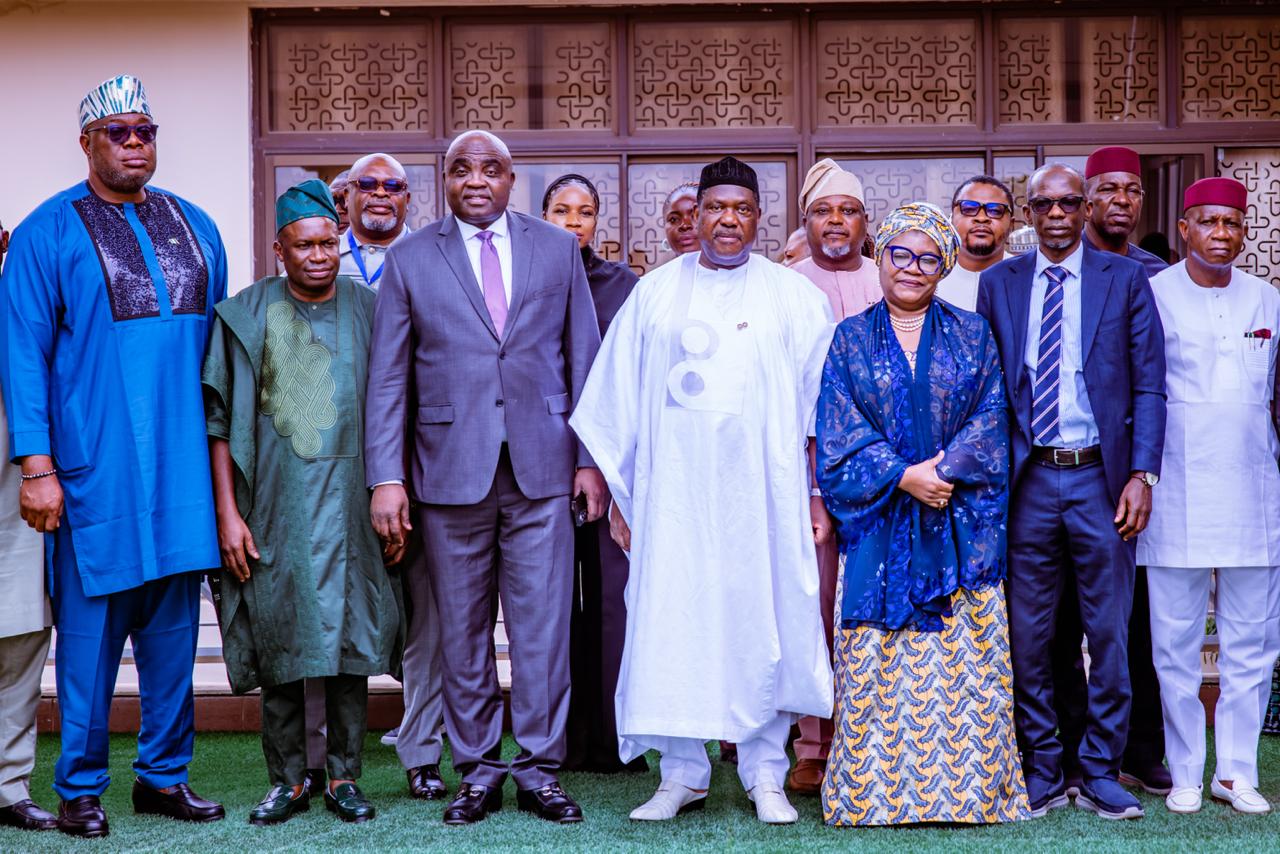
The Federal Government of Nigeria has inaugurated a technical committee to review a proposed $200 billion integrated infrastructure project submitted by De-Sadel Nigeria Limited.
The development was disclosed in a statement issued on Thursday by the Office of the Office of the Secretary to the Government of the Federation.
According to the statement, the proposal outlines a multi-phase initiative that integrates gas development, power generation and transmission, alongside the construction of a 4,000-kilometre high-speed rail network.
The committee has been mandated to assess the feasibility and overall viability of the project before the government takes a final decision.
The proposed rail component will span approximately 4,000 kilometres on a dual-track system connecting major cities including Lagos, Abuja, Kano, and Port Harcourt.
The network is expected to significantly reduce travel time between the country’s key economic hubs and strengthen national connectivity.
“The proposed project, which is estimated at Two Hundred Billion United States Dollars (US $200 Billion), is envisioned as a multi-phase programme that integrates gas development, power generation and transmission, and the construction of a 4,000-kilometre high-speed rail network connecting major economic corridors of the country,” the statement said.
The George Akume, Secretary to the Government of the Federation, said the initiative has the potential to transform Nigeria’s transport infrastructure and enhance energy security.
“The project has the potential to significantly transform Nigeria’s transport infrastructure, strengthen energy security, stimulate industrial growth and deepen national integration,” Akume said.
The Managing Director and Chief Executive Officer of De-Sadel Nigeria Limited, Samuel Ukoh, noted that the project could reduce travel time between major cities by as much as 75 per cent.
He added that the proposed rail system is designed to connect all 36 states and the Federal Capital Territory, positioning it as a backbone for national mobility and economic integration.
Meanwhile, Nigeria’s rail sector recorded steady growth in 2025, reflecting increasing demand for rail transportation services despite existing infrastructure gaps.
Data from the Nigerian Railway Corporation shows that a total of 3,888,661 passengers were transported on NRC-managed rail lines in 2025, generating about N7.77 billion in revenue.
Quarterly performance indicated mixed trends. The second quarter recorded the highest revenue of N2.28 billion from 989,793 passengers, while the third and fourth quarters saw moderate declines in ridership and earnings.
Freight operations also contributed to sector performance. Cargo volumes peaked at 210,570 tonnes in the second quarter before dropping to 110,480 tonnes in the fourth quarter.
Freight revenue followed a similar pattern, rising to N775.75 million in the second quarter before declining to N397.82 million in the final quarter of the year.