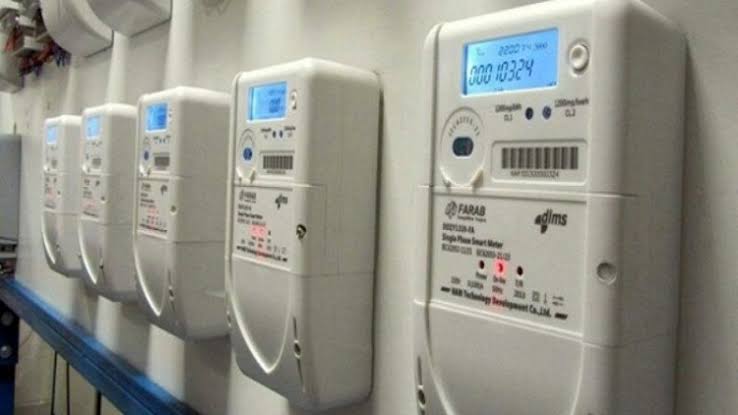
Only about 200,000 smart meters have been installed under the federal government’s $500 million World Bank-backed Distribution Sector Recovery Program (DISREP), officials revealed on Wednesday, raising concerns over the slow pace of deployment.
The program, designed to close Nigeria’s estimated 5.66 million metering gap, has delivered nearly 700,000 meters to the country. However, the Bureau of Public Enterprises (BPE) and other power sector officials acknowledged at a press briefing in Abuja that the rate of installation by Distribution Companies (DisCos) remains slow and “not encouraging.”
The briefing, led by Ayodeji Gbeleyi, Director-General of BPE, included key stakeholders such as the Nigerian Electricity Regulatory Commission (NERC), the Ministry of Power, the National Mass Metering Initiative, and DisCo Managing Directors. It aimed to clarify public concerns over meter deployment, funding arrangements, and provide a status update on implementation.
“This is a landmark transaction for the country,” Gbeleyi said. “Under DISREP, we are importing meters at scale to bridge the metering gap and ensure consumers are billed accurately. The meters and installation are provided free of charge to customers, and the costs have been paid to the contractor. Revenue will be recovered through the Multi-Year Tariff Order (MYTO), regulated by NERC.”
The program aims to deliver 3.2 million free smart meters over four years through a combination of international and local competitive bidding. Phase one involved importing 1,437,500 meters, including single-phase and three-phase units, of which roughly 700,000 are already in-country, while local manufacturers are supplying 217,000 meters. Phase two will import an additional 1,550,000 meters.
Adedayo Olowoniyi, Chief Technical Adviser to the Minister of Power, described the slow installation rate as “not an encouraging statistic,” noting that only 150,000 to 200,000 meters have been deployed so far. He emphasised that the meters are provided free to consumers and that cost recovery mechanisms are already in place through regulatory structures.
“The meter gap must be closed during this administration, and the distribution segment must support the program,” Olowoniyi said. “The focus is on closing the gap efficiently and with the lowest cost of capital available.”
NERC Chairman Musiliu Olalekan Oseni highlighted the role of meters in ensuring revenue assurance for utilities and building consumer confidence. “Meters allow customers to see that they are being billed accurately for what they consume,” he said, while addressing misinformation circulating in the media.
The DISREP program is integrated with other government initiatives, including the Presidential Metering Initiative (PMI) and the Meter Acquisition Fund (MAF), which aim to accelerate deployment and close the national metering gap.
Officials stressed that the program is not only about improving meter penetration but also enhancing service delivery, revenue collection, and the financial sustainability of DisCos. Through a combination of infrastructure investment, performance-based financing, and governance reforms, DISREP seeks to make Nigeria’s electricity distribution sector more transparent, bankable, and responsive to consumers.
Despite progress, nearly half a million meters are still awaiting installation, prompting officials to call for faster rollout to achieve program objectives. DisCo CEOs present at the meeting reiterated their commitment to accelerate deployment while warning consumers against meter tampering, which undermines revenue collection and strains the power sector.