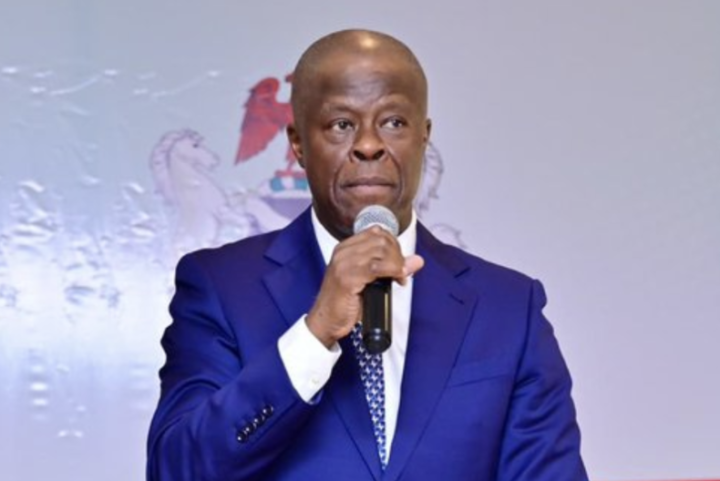
The Minister of Finance and Coordinating Minister of the Economy, Mr Wale Edun, has assured that the Federal Government’s economic reform agenda is designed to deliver inclusive, job-rich growth, with a strong focus on digital work opportunities for Nigerian youths.
Speaking at Nigeria House during the just-concluded 2026 World Economic Reforms in Davos, Edun outlined Nigeria’s reform priorities, highlighting fiscal discipline, macroeconomic stability, and the creation of a predictable, investor-friendly environment.
Nigeria House, he noted, has become a one-stop hub for dialogue, partnerships, and deal-making at the World Economic Forum, positioning Nigeria as an emerging destination for sustainable, long-term investment amid growing global uncertainty.
In a statement issued by the Ministry of Finance Director of Information and Public Relations, Mr Osagie Jacobs, the minister said Nigeria has begun to record tangible gains, including stronger manufacturing value chains, growth in Micro, Small and Medium Enterprises (MSMEs), and expanded energy access.
Edun explained that the country has moved decisively from economic stabilisation to consolidation, embedding reforms that promote private-sector-led growth, strengthen institutions, and restore investor confidence.
His remarks followed a recent International Monetary Fund (IMF) assessment, which acknowledged that Nigeria’s macroeconomic stabilisation efforts are beginning to yield results.
In its January 2026 World Economic Outlook Update, the IMF revised growth projections for Sub-Saharan Africa upward, citing Nigeria among key economies where policy adjustments are improving the outlook.
The minister also spoke on Nigeria’s national bio-economy policy, stressing the government’s commitment to promoting a circular economy beyond ethanol production.
Represented by the Director of Economic Growth at the Federal Ministry of Budget and Economic Planning, Auwal Mohammed, Edun said the policy focuses on the entire bio-economy value chain, including high-quality stems and starch, carbon dioxide capture during fermentation, and animal feed produced from distillery grains.
“We are looking at the entire value chain — from high-yielding, disease-resistant varieties to investment, technology, market access, and the enabling environment,” he said.
According to him, the initiative will leverage a Triple-Helix Knowledge Transfer Partnership, combining government, industry, and research institutions to drive innovation, investment, and sustainable economic growth.