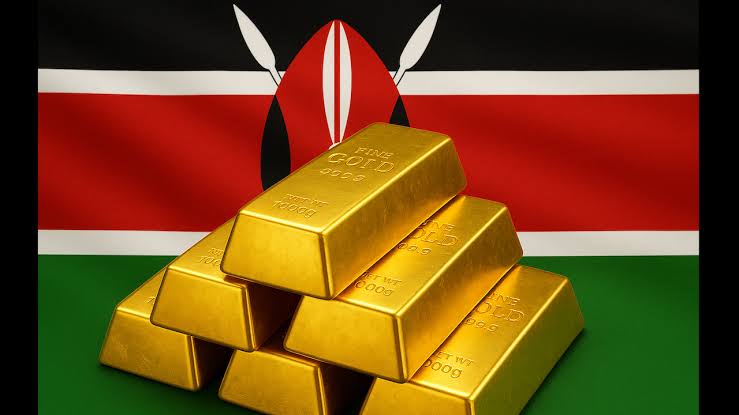
Kenya’s Central Bank (CBK) has announced plans to purchase gold as part of a strategy to diversify its foreign exchange reserves, joining other African nations that have turned to bullion to strengthen financial buffers against global market volatility.
Governor Kamau Thugge told reporters on 11 February 2026 that gold will serve as “an extra buffer” in Kenya’s reserve portfolio, putting the country in line with peers such as the Democratic Republic of Congo, Rwanda, and Namibia.
“We anticipate going into the purchase of gold as an extra buffer. This is something that we have indicated before; it is one of the ways of diversifying our holding of reserves,” Governor Thugge said at a press briefing.
The announcement follows a 25-basis-point cut in Kenya’s benchmark lending rate to 8.75 per cent on 10 February 2026, a move intended to stimulate credit growth and broader economic activity.
As of 9 February 2026, Kenya’s foreign exchange reserves stood at $12.46 billion, providing roughly 5.4 months of import cover, a key measure of external liquidity. Historically, Kenya has held minimal gold reserves, approximately 0.02 tonnes in 2025, but the CBK has long acknowledged the potential for increasing holdings as part of a diversification strategy.
Analysts say gold can act as a store of value and a hedge against foreign exchange risk during times of macroeconomic stress. Across Africa, several central banks are accumulating gold, including Ghana, which uses a state trading body to bolster reserves, and Zimbabwe, which has introduced a gold-backed currency to stabilise its financial system.
For Kenya, adding gold signals a strategic shift toward a more balanced reserve portfolio, enhancing resilience to external shocks while aligning with global reserve management trends.