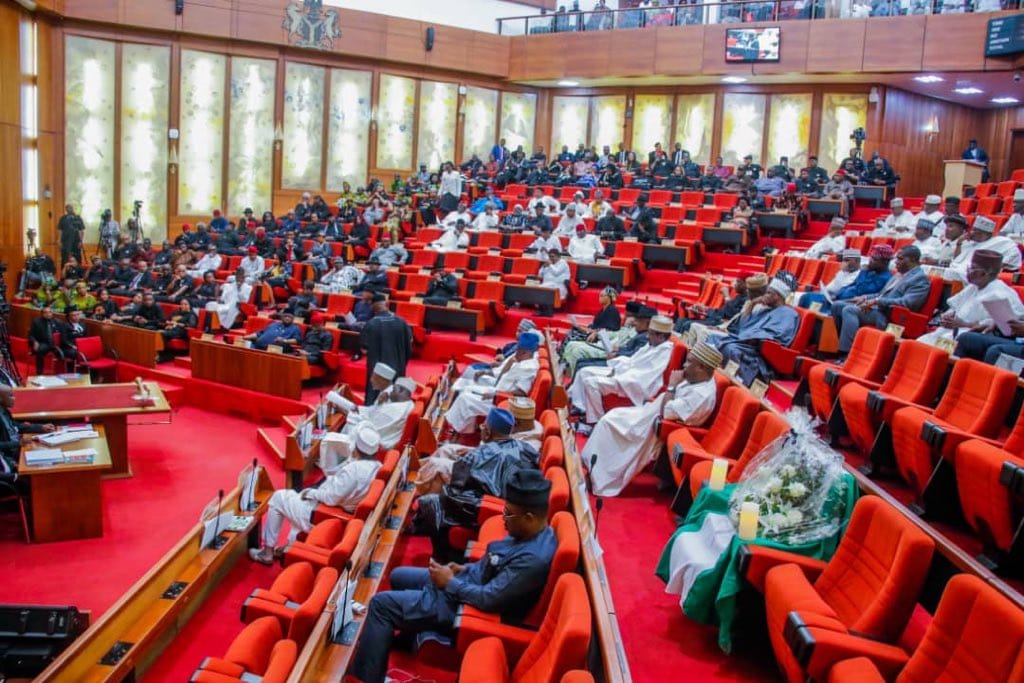
The National Assembly has declared that it will no longer approve extensions to Nigeria’s budget implementation cycles, signaling a tougher stance on fiscal discipline and governance.
Chairman of the Senate Committee on Appropriations, Senator Solomon Olamilekan Adeola, made this known on Monday during the public hearing on the 2026 Appropriation Bill held at the National Assembly.
The session was attended by key government officials and stakeholders, including the Minister of State for Finance, Dr. Doris Nkiruka Uzoka-Anite; the Accountant General of the Federation, Shamseldeen Olujimi; economists, fiscal policy experts, and other senior officials.
Adeola said repeated budget extensions have weakened planning, execution, and accountability, stressing that lawmakers are determined to enforce a more disciplined budgeting process going forward.
“Never again will the National Assembly approve budget extensions. We must discipline our budgeting cycle, enforce strict adherence to appropriation timelines, and ensure better coordination between policy design and implementation,” the senator stated.
The lawmaker also addressed public concerns over Nigeria’s rising debt profile, defending the government’s continued borrowing to finance budget deficits. According to him, the country’s massive development needs and infrastructure gaps make borrowing unavoidable.
“Nigeria cannot help but keep borrowing because revenue inflows are unpredictable and development needs are enormous. What matters is how we borrow and how we fund our deficits,” Adeola said.
He, however, cautioned that deficit financing must be approached more strategically, urging the government to adopt smarter and more sustainable borrowing practices to avoid long-term fiscal stress.
Adeola further acknowledged that debt servicing remains a significant challenge for the country but emphasized the importance of meeting Nigeria’s obligations to safeguard its sovereign credit rating and maintain credibility in the global financial system.
He added that improved coordination between fiscal policy formulation and budget implementation would be critical in ensuring that borrowed funds translate into tangible economic growth and development.