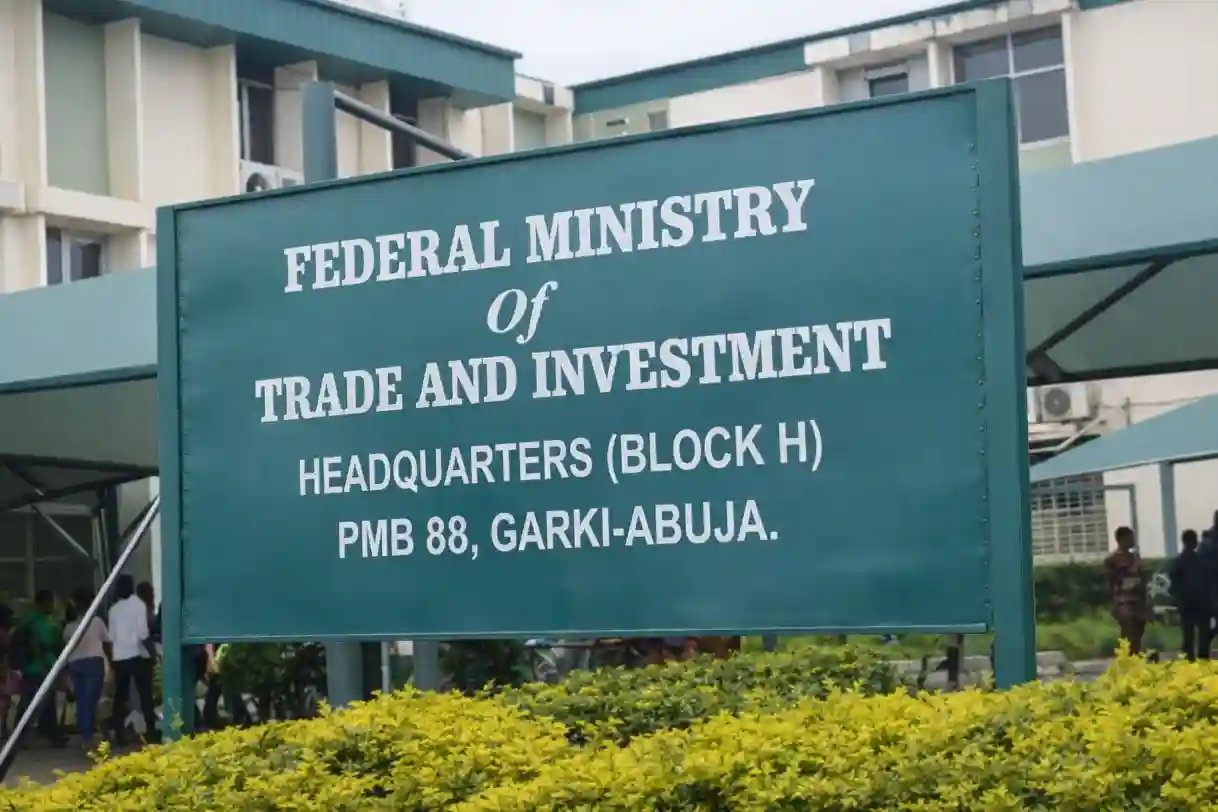
Nigeria attracted nearly $14bn in combined foreign portfolio investment (FPI) and foreign direct investment (FDI) in the first nine months of 2025, driven by renewed investor confidence and wide-ranging economic reforms, the Federal Government has said.
According to the Federal Ministry of Industry, Trade and Investment, the inflows recorded between the first and third quarters of 2025 surpassed total foreign investment attracted in the whole of 2024.
In a document titled “2025: A Defining Year for Nigeria’s Industry, Trade and Investment,” released on Tuesday, the ministry disclosed that foreign portfolio investment led the recovery, rising to $12.99bn, while foreign direct investment showed “promising, robust growth from a historically low base.”
The ministry noted that FDI expanded by 700 per cent quarter-on-quarter in the third quarter of 2025 and reached $936m year-to-date, signalling renewed investor confidence in Nigeria’s reform agenda.
It attributed the surge in capital inflows to macroeconomic and structural reforms implemented under President Bola Tinubu’s Renewed Hope Agenda, including foreign exchange liberalisation, fuel subsidy removal, monetary tightening, and enhanced investor aftercare.
“As a result, combined foreign portfolio investment and foreign direct investment reached nearly $14bn in Q1–Q3 2025, surpassing total inflows in 2024,” the document stated, adding that the Nigerian Exchange ranked among the world’s top-performing stock markets during the year.
The ministry also reported progress in converting investment commitments into active projects, with four priority investments valued at $13.7bn advancing during the year. This represented a conversion rate of over 25 per cent from the $50.8bn worth of signed Memoranda of Understanding.
“In 2025, Nigeria significantly strengthened its investment facilitation architecture, transitioning from passive promotion to an active, systems-driven model that reduces information asymmetries, improves project visibility, and enhances the bankability of investment pipelines,” the ministry said.
It added that structured deal origination helped build a de-risked investment pipeline exceeding $5bn across priority sectors, supported by curated deal rooms, targeted roadshows, and hands-on investor support.
Investor confidence also received a boost in June 2025 when President Tinubu hosted West African leaders at the West Africa Economic Summit, where a deal room generated over $400m in investment origin and showcased vetted opportunities.
The Minister of Industry, Trade and Investment, Dr Jumoke Oduwole, also led high-level trade missions to countries including the United Kingdom, United States, France, United Arab Emirates, Saudi Arabia, Japan, China, and Brazil, helping to deepen investment pipelines.
“These engagements have delivered tangible gains, enhancing investor confidence, improving deal flow quality, and positioning Nigeria as a credible, reform-driven destination for long-term capital,” the ministry said.
On domestic investment, the ministry described Nigerian investors as the “first and most enduring vote of confidence” in the economy, noting that 75 per cent of issues raised at the 2025 Domestic Investors Summit were resolved on the spot, with all resolved within five working days.
On trade, non-oil exports grew by 21 per cent to $12.8bn in the first half of 2025, nearly double the $6.5bn target, contributing to a N12tn trade surplus. Overall trade value expanded by 14 per cent, supported by improved trade facilitation and logistics reforms.
Key non-oil export products included cocoa and derivatives, sesame seeds, cashew nuts, shea butter, ginger, hibiscus flower, rubber, palm oil derivatives, fertilisers, cement, and liquefied natural gas.
The ministry added that Special Economic Zones generated over $500m in export revenues and created more than 20,000 direct jobs, while Nigeria strengthened its leadership role under the African Continental Free Trade Area by advancing digital trade initiatives.
Looking ahead, the ministry said it would focus on execution and measurable impact in 2026, targeting priority sectors such as solid minerals, digital trade, the creative economy, and climate-smart industrialisation.
“These results affirm that 2025 marked a decisive inflexion point for Nigeria, restoring investor confidence, strengthening competitiveness, expanding exports, and laying the foundation for sustained and inclusive growth,” the document stated.