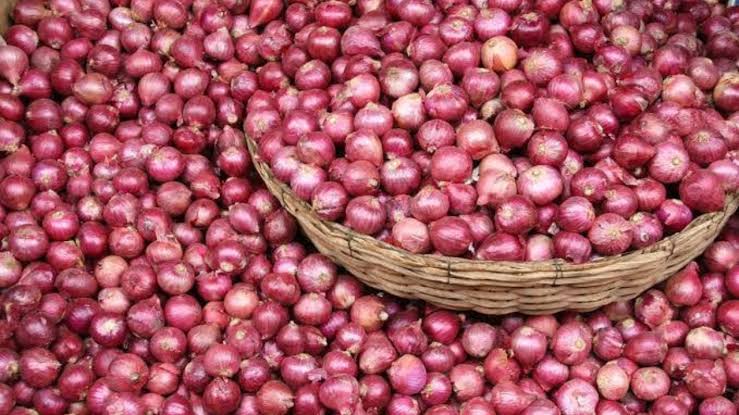
Nigeria remains Africa’s second-largest onion producer, trailing only Egypt, with an estimated annual production of 2.1 million metric tonnes, the National Onion Producers, Processors and Marketers Association of Nigeria (NOPPMAN) has disclosed.
The national president of NOPPMAN, Alhaji Aliyu Isah, made the revelation in an interview with the News Agency of Nigeria on Tuesday in Abuja, highlighting the sector’s contribution to national revenue and rural livelihoods.
“Nigeria currently produces about 2.1 million metric tonnes of onions annually, with a value of approximately N1.17 trillion,” Isah said, noting that Nigerian onions are exported across West and Central Africa, as well as to select European markets.
Isah described onion production as a major pillar of Nigeria’s agricultural economy, attributing growth to government support, including access to improved seeds, fertilisers, and agrochemicals. Partnerships with ministries and agencies have also enhanced farmer training and adoption of modern agricultural practices.
He added that the association collaborates with customs authorities to facilitate cross-border trade, while working with the Nigerian Export Promotion Council to reduce export costs and streamline logistics for processed onion products. Cooperation with Ghana, Niger, and Burkina Faso has further improved regional trade flows.
“The association is committed to fostering cooperation among farmers, marketers, processors, and exporters to build a strong, integrated, and efficient onion value chain,” Isah said.
Looking ahead, NOPPMAN aims to expand processing facilities to boost value addition, strengthen marketing strategies, and increase export promotion in 2026. Isah also emphasised youth participation as a key driver for innovation, productivity, and income growth in the sector.
He encouraged young Nigerians to embrace onion farming and agribusiness as viable career paths, noting that agriculture offers opportunities beyond job seeking. Drawing from his own experience, Isah explained that his success in onion farming was supported by government agricultural programmes.
NOPPMAN, under Isah’s leadership as President of the Regional Observatory Body of Onion in West and Central Africa, remains focused on boosting local production, enhancing processing capabilities, promoting international trade, and safeguarding the welfare of onion farmers and marketers.
He concluded on an optimistic note, stating that with ongoing efforts in production, value addition, and youth engagement, Nigeria is poised to eventually become the largest onion producer in Africa.