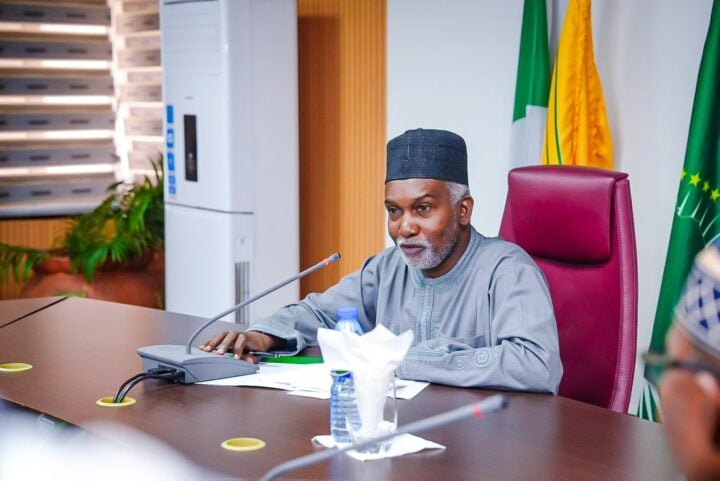
Minister of Foreign Affairs, Yusuf Tuggar, has called on international investors to look beyond Nigeria’s reported security challenges, describing them as exaggerated and misleading. Speaking on CNN at the World Economic Forum in Davos, Switzerland, Tuggar emphasized that incidents of insecurity are “isolated cases” and do not reflect the broader reality across the country.
Tuggar explained that instability in the Sahel region had spilled into Nigeria but urged investors to treat the country like any other global market. “The fact that there were isolated incidents in some places in the country does not mean that it’s the entire country,” he said.
He further criticized the over-hyping of geopolitical risks in Africa, stating that such narratives can erode investor confidence. “It’s very important to see the conflict for what it is. It’s a regional conflict that has spilled over into Nigeria… It’s not removed from the proliferation of weaponry, of fighters, and climate change issues, and so many other complex issues,” Tuggar added.
The minister highlighted several macroeconomic reforms under the Bola Tinubu administration aimed at boosting investor confidence, including changes to the foreign exchange regime, tax reforms, and a reduction in corporate income tax. Nigeria’s foreign reserves have risen to around $43 billion, easing access to foreign exchange and supporting economic stability.
On security, Tuggar noted gains against Boko Haram through regional cooperation, though efforts were disrupted following Niger Republic’s withdrawal from the multinational joint task force. He warned that persistent negative framing of Nigeria’s security situation could worsen insecurity by encouraging extremist attacks for attention.
Tuggar stressed the importance of a holistic view of Nigeria, encouraging investors to focus on reforms and economic opportunities rather than isolated security incidents.
Earlier at the forum, WTO Director-General Dr. Ngozi Okonjo-Iweala advised Nigeria to target global investments and supply chain relocations to reduce import dependence, deepen manufacturing, and drive job creation. She noted that rising geopolitical tensions, especially between the US and China, are accelerating global supply chain diversification.