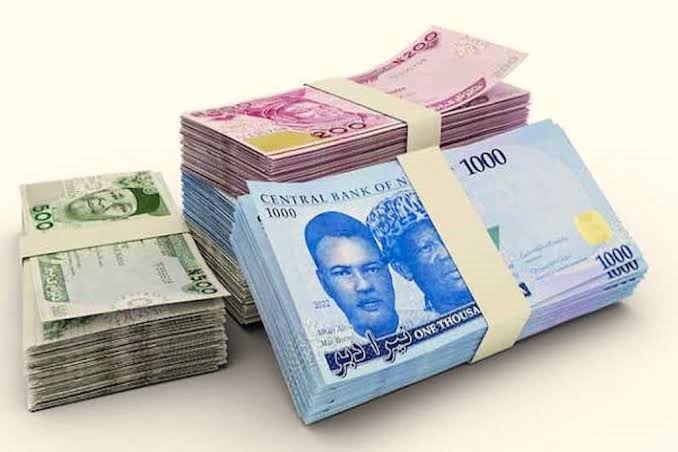
The Central Bank of Nigeria (CBN) has disclosed that the country’s currency in circulation rose to ₦5.7 trillion as of December 2025, marking the highest level on record. This represents an increase from ₦5.44 trillion recorded in December 2024.
The surge came during a period of tighter monetary policy, with Nigeria’s inflation rate easing to 15.15 percent in December 2025, down from 17.33 percent in November 2025, according to official data.
CBN figures show that currency in circulation averaged about ₦5.1 trillion throughout 2025, even as electronic transfers and digital banking channels continued to expand. Currency in circulation refers to physical cash—paper notes and coins—used for everyday transactions by consumers and businesses.
The increase was particularly pronounced during the festive period, as Nigerians withdrew more cash to meet higher spending needs for Christmas and New Year celebrations, leading to crowded banking halls across the country.
Historically, the figures highlight a sharp rise over recent years. Currency in circulation crossed the ₦5 trillion mark in December 2024, reaching ₦5.44 trillion, compared with ₦3.65 trillion in 2023. In January 2024, during the peak of the CBN’s currency redesign policy, cash in circulation stood at ₦3.65 trillion, rising slightly to ₦3.69 trillion by February 2024.
The apex bank had earlier reported that currency in circulation closed December 2023 at ₦3.65 trillion, up from ₦1.39 trillion in January 2023, reflecting a significant rebound after cash shortages linked to the naira redesign exercise.
The redesign of the ₦200, ₦500, and ₦1,000 denominations was announced by the CBN in late 2022, with the new notes entering circulation in December 2022 and running concurrently with old notes into January 2023.
Despite Nigeria’s push toward a cashless economy, the latest data suggests that physical cash remains deeply embedded in consumer behavior, especially during peak spending periods.