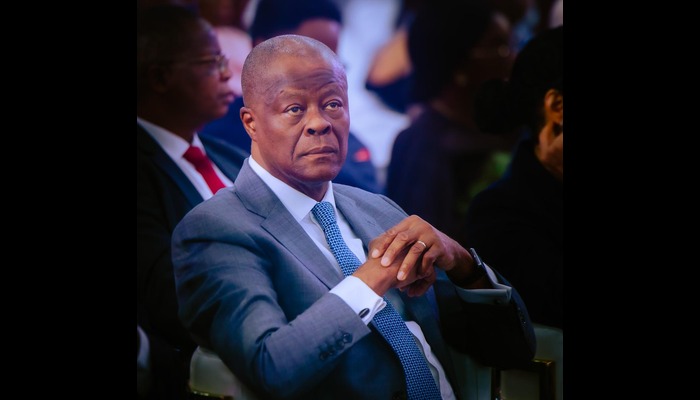
Nigeria’s Minister of Finance and Coordinating Minister of the Economy, Wale Edun, has warned that the country’s economy is currently in shock due to the ripple effects of the ongoing conflict in the Middle East, which continues to destabilise global markets.
In a statement released on Monday through his media adviser, Dr. Ogho Okiti, Edun said the external shock comes at a time when Nigeria is already implementing major economic reforms aimed at strengthening fiscal stability and reducing poverty levels.
The comments come as global financial leaders prepare for the 2026 World Bank and International Monetary Fund (IMF) Spring Meetings in Washington, D.C., where more than 1,000 delegates from 190 countries are expected to attend under the theme “Anchoring Stability and Promoting Balanced Growth.”
The International Monetary Fund has warned that up to $50 billion in emergency financing may be required to support countries facing severe balance-of-payments shocks linked to rising energy costs and global disruptions.
IMF Managing Director Kristalina Georgieva also indicated that global growth forecasts are expected to be revised downward due to “scarring effects from spiralling energy costs, supply disruptions, and damaged infrastructure” linked to the conflict.
The crisis escalated following heightened tensions between the US, Israel, and Iran, with reports of disruptions to the Strait of Hormuz, a key global shipping route for oil. The instability has triggered sharp volatility in energy markets and increased inflationary pressures worldwide.
In Nigeria, Edun said the effects are being transmitted through multiple channels, particularly rising fuel prices, increased food costs, and broader inflationary pressures that are straining households and businesses.
He noted that international crude oil prices have surged significantly since the outbreak of the conflict, with Bonny Light rising from around $70–$73 per barrel to peaks above $110–$120.
While acknowledging that higher oil prices could improve Nigeria’s foreign earnings and fiscal revenues as an oil-producing nation, Edun cautioned that the broader instability presents serious macroeconomic risks at a time when the country is still adjusting to ongoing reforms.
He added that the government remains committed to strengthening economic resilience, stabilising key indicators, and attracting investment to support long-term growth and poverty reduction.
According to Edun, the government has identified three key transmission channels through which the crisis is impacting the Nigerian economy, underscoring the need for continued policy coordination and global engagement to mitigate further shocks.