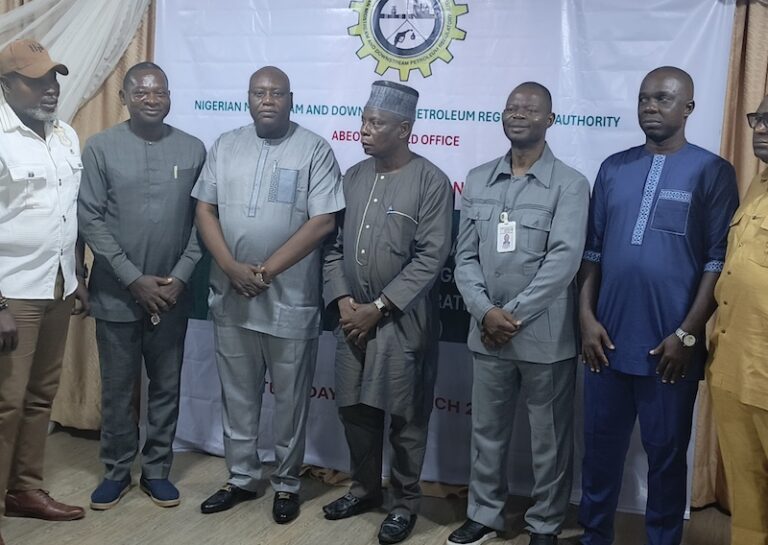
The Ogun State Coordinator of the Nigerian Midstream and Downstream Petroleum Regulatory Authority, Dr Akinyemi Atilola, has called on Liquefied Petroleum Gas (LPG) retailers to prioritise safety and avoid unwholesome practices that could endanger both their businesses and local communities.
Speaking during the 2026 first-quarter stakeholders’ engagement held on Wednesday in Abeokuta, Atilola stressed that LPG retailers are vital to achieving the Federal Government’s gas usage and expansion objectives. However, he emphasised that operations must strictly follow safety rules and international best practices.
He warned that while the regulatory body will continue to provide guidance and leadership for the sector’s growth, breaches of safety regulations would not be tolerated, and erring retailers would face sanctions.
Addressing the theme “Gas Deepening and Expansion: Hazards Associated with Gas Category D Business,” Atilola explained that Category D operations, under which LPG retailers operate, are defined as drop-and-pick cylinder operations—where customers bring empty cylinders to collect pre-filled ones.
He noted, however, that some retailers engage in decanting, which involves transferring LPG from one cylinder to another. Atilola described decanting as a hazardous practice that can lead to overfilling, gas leaks, severe fire risks, and explosions.
“We must ensure safety in the operations of cylinder business operators and in homes,” Atilola said. “As much as we want increased gas utilisation, we must prioritise safety for our people. That is why this workshop is necessary.”
The coordinator revealed that about five gas outlets were sealed in Ogun State last year for violating standard operating procedures and warned that enforcement would continue this year.
Speaking alongside Atilola, Mr Ogunkoya Abiodun of NUPENG, and Mr Raifu Oyedele, lauded the NMDPRA for supporting the gas sector’s growth and urged further collaboration, particularly in training and operator sensitisation.
A 10-point communiqué issued at the end of the engagement highlighted a commitment to self-regulation within the LPG sector. Gas unions were tasked with organising safety training and retreats for members. Operators were also urged to ensure cylinder integrity, prevent overfilling, maintain regular safety engagements, and strictly discourage decanting, with penalties for offenders.