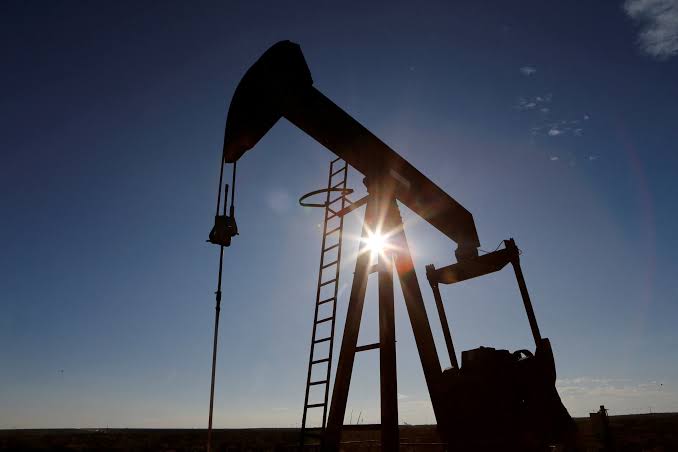
Oil prices moved higher on Wednesday, extending the previous session’s rally as supply concerns persisted following disruptions to US crude production and exports caused by a winter storm, while ongoing Middle East tensions added further support.
Brent crude futures rose 28 cents, or 0.4 per cent, to $67.85 a barrel by 0410 GMT, while US West Texas Intermediate (WTI) gained 35 cents, or 0.6 per cent, to $62.74 a barrel. Both benchmarks jumped by about 3 per cent on Tuesday.
Analysts and traders estimate that US producers lost up to 2 million barrels per day, roughly 15 per cent of national output, over the weekend as the severe storm strained energy infrastructure and power grids. According to ship-tracking service Vortexa, crude oil and liquefied natural gas exports from US Gulf Coast ports fell to zero on Sunday, amplifying concerns over near-term supply.
Additional support for prices has come from Kazakhstan, where production disruptions are also tightening supply. Toshitaka Tazawa, an analyst at Fujitomi Securities, said the loss of output in the country is helping to underpin the current rally.
“But once supply fears ease, selling pressure is likely to return,” Tazawa said, adding that expectations of a global crude supply surplus this year, alongside geopolitical risks such as Middle East tensions, could keep WTI trading around $60 a barrel in the near term.
Kazakhstan’s largest oilfield, Tengiz, is expected to restore less than half of its normal production by February 7, as it gradually recovers from a fire and power outage, according to sources familiar with the situation.
However, some of the supply concerns were partially offset by comments from pipeline operator Caspian Pipeline Consortium (CPC), which transports about 80 per cent of Kazakhstan’s oil exports. The company said it has returned to full loading capacity at its Black Sea terminal after completing maintenance at one of its three mooring points.
Markets are expected to remain sensitive to further developments around supply disruptions, geopolitical risks, and broader demand signals in the days ahead.