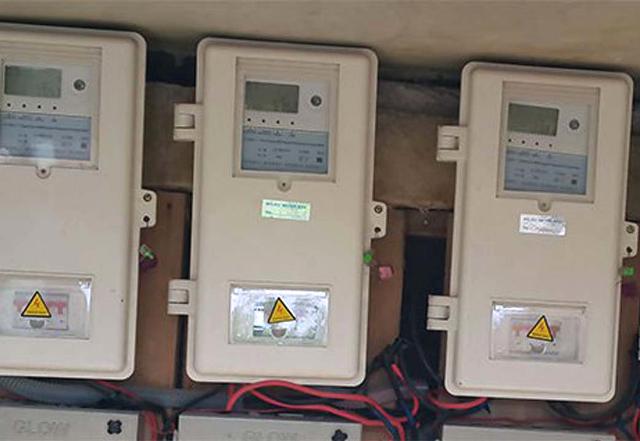
More than 5.3 million electricity consumers across Nigeria are stuck in a growing dispute between the federal government and electricity distribution companies (DisCos) over who should bear the cost of installing supposedly “free” electricity meters, raising concerns about the future of the country’s campaign against estimated billing.
For many consumers, the consequences are already being felt.
“Every month, they send me a bill for ₦15,000, sometimes ₦20,000,” said Chioma Okafor, a small business owner in Oshodi, Lagos, who has waited more than three years for a meter. “I don’t even use that much power. When I complain, they tell me to get a meter. When I ask for a meter, they tell me to wait. It’s frustrating.”
The standoff escalated on Thursday after the Minister of Power, Adebayo Adelabu, issued a strong warning during an inspection of newly imported smart meters at APM Terminals, Lagos. Adelabu threatened prosecution for any DisCo official or installer found collecting money from customers for meter installation.
The meters were procured under the World Bank–funded Distribution Sector Recovery Programme (DISREP) and, according to the minister, must be installed at no cost to consumers.
“It is unprecedented that these meters are to be installed and distributed to consumers free of charge, free of charge,” Adelabu said. “Nobody should collect money from any consumer. It is an illegality. It is an offence for officials of distribution companies across Nigeria to request a dime before installation.”
However, distribution companies swiftly pushed back, revealing that while customers may not pay upfront, the DisCos themselves are expected to reimburse the federal government over a 10-year period, effectively shifting the financial burden to utilities already struggling with liquidity challenges.
“The government is saying the meters are free, but someone has to pay,” a senior DisCo executive, who asked not to be named, said. “If we’re expected to recover these costs over 10 years while also paying for installation, how is this sustainable? We’re already operating at a loss.”
The controversy comes at a critical moment for Nigeria’s power sector. As of September 30, 2025, only 6.66 million of the country’s 12.03 million active registered electricity customers were metered, representing a metering rate of just 55.37 percent. Nearly half of all consumers are still subjected to estimated billing, a system widely criticised for being opaque, inflationary, and prone to abuse.
At Oyingbo Market in Lagos, Abubakar Musa, a yam seller, says estimated billing has made it difficult to plan his business. “Sometimes they bring bills higher than what I make in a week,” he said. “We just want meters so we can pay for what we use.”
Energy analysts warn that unless the disagreement between the federal government and DisCos is resolved quickly, Nigeria’s long-standing electricity metering crisis may persist—undermining consumer trust and threatening broader power sector reforms.