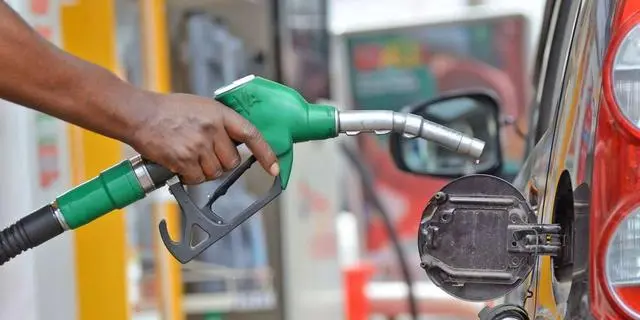
The Petroleum Products Retail Outlets Owners Association of Nigeria (PETROAN) has warned that the pump price of Premium Motor Spirit (PMS) could surge to N2,000 per litre amid escalating tensions in the Middle East.
The association called on the Nigerian National Petroleum Company Limited (NNPCL) to strengthen domestic refining capacity as a strategic measure to protect Nigeria from international petroleum market shocks.
Billy Gillis-Harry, PETROAN’s National President, made the statement in Port Harcourt during a keynote address titled “Deconstructing Energy Trilemma”, organised by the Department of Petroleum Economics and Policy Studies at Ignatius Ajuru University of Education.
Harry urged NNPCL’s Group CEO, Bayo Ojulari, to expedite production at local refineries, particularly the Area 5 Plant at the Port Harcourt Refinery and the Warri Refinery.
He highlighted that the ongoing conflict involving Israel, the United States, and Iran has pushed global petroleum prices to alarming levels. “Sustained drone and missile attacks now threaten critical oil routes and infrastructure, creating uncertainty in global supply chains,” PETROAN stated.
Before the crisis, PMS sold at N774 per litre but now trades above N1,000 per litre, representing a roughly 30% increase. Automotive Gas Oil (AGO) has risen from N950 to N1,400 per litre, a 49% increase. PETROAN projected that PMS could near N2,000 per litre while AGO could approach N3,000 per litre if the crisis persists.
Harry stressed that rehabilitating Nigeria’s refineries for immediate domestic production is critical. Local refining would reduce exposure to international market volatility, leveraging the country’s abundant crude oil resources under NNPCL. He added that government-owned refineries are less vulnerable to global supply disruptions compared to privately owned plants reliant on imported crude.
He warned that continued fuel price increases could worsen inflation, cause job losses, deepen economic hardship, increase transport costs, and drive up prices of goods and services nationwide. He noted the essential role of PMS for mobility and AGO for industrial and manufacturing operations.
PETROAN expressed confidence that the reform policies of President Bola Ahmed Tinubu would eventually provide relief to Nigerians and stimulate economic growth.
Meanwhile, the Nigerian Midstream and Downstream Petroleum Regulatory Authority (NMDPRA) said that fluctuations in fuel pump prices are a direct result of market dynamics under Nigeria’s deregulated downstream petroleum sector. Its spokesperson, George Ene-Ita, told the News Agency of Nigeria that pump price changes reflect supply and demand conditions rather than government intervention.
Global oil markets have also reacted to the Middle East crisis. Brent crude futures surged 20% last week, while West Texas Intermediate (WTI) crude climbed roughly 25%, amid concerns about supply disruptions. Attacks on oil infrastructure, including strikes on Tehran’s oil storage facilities, have heightened volatility.
The G7 finance ministers are reportedly discussing a joint release of emergency oil reserves coordinated by the International Energy Agency (IEA) to stabilise markets, with three G7 nations, including the US, supporting the move.