The establishment of integrated pipeline security measures in the Niger Delta has significantly boosted Nigeria’s crude oil production, rising from a historic low of 960,000 barrels per day in 2022 to an average of 1.71 million barrels per day.
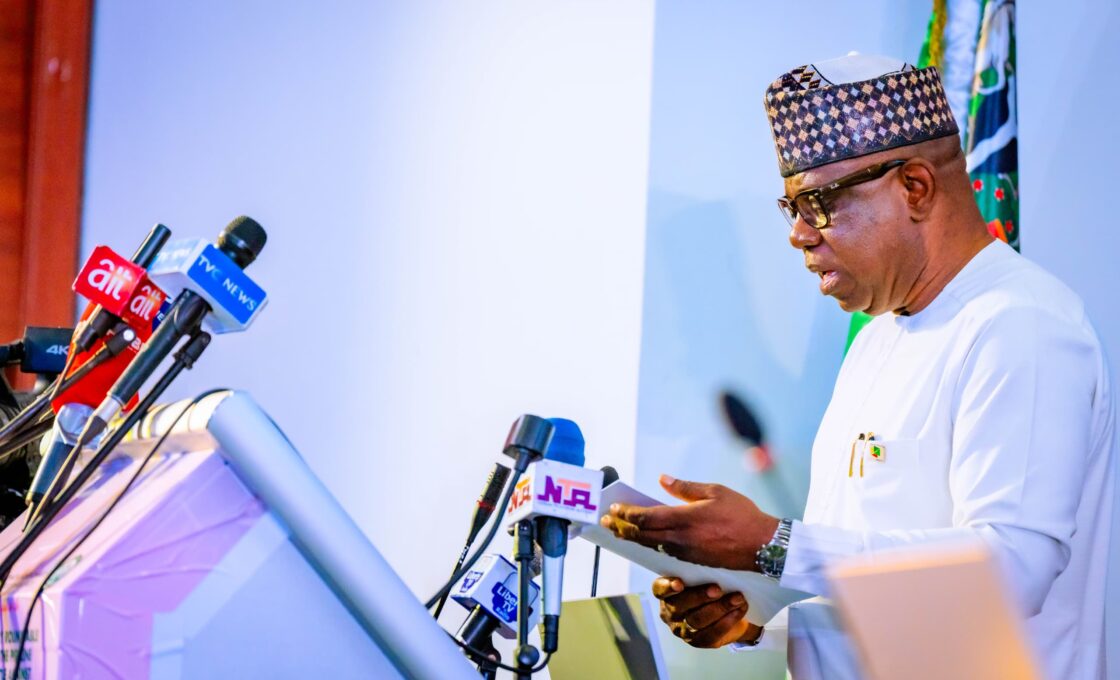
This was disclosed by the Group Chief Executive Officer of Nigerian National Petroleum Company Limited, Bashir Bayo Ojulari, during the Parliamentary Roundtable on the State of Pipelines Security held at the National Assembly Complex on Wednesday.
Ojulari noted that the country’s oil output also recorded a peak production of 1.84 million barrels per day in 2025, attributing the growth to improved security across critical oil infrastructure in the Niger Delta.
According to him, the progress achieved in tackling crude oil theft and pipeline sabotage was the result of a coordinated and comprehensive security framework.
He explained that the success of the initiative was driven by what he described as an integrated energy security model.
“It combines legislative and executive policy alignment, actionable intelligence, kinetic deployment capabilities, regulatory oversight, industry cooperation, and community-embedded surveillance mechanisms,” Ojulari said.
The NNPC boss added that the improved security architecture has helped curb the long-standing challenges of oil theft and pipeline vandalism that had previously reduced Nigeria’s crude production capacity.
In a statement issued by the company’s spokesperson, Andy Odeh, Ojulari said the recovery in production has also restored investor confidence in Nigeria’s oil and gas sector.
At the event, the President of the Senate, Godswill Akpabio, who was represented by Jimoh Ibrahim, called for stronger collaboration among security agencies and industry stakeholders to address the remaining challenges affecting crude oil production.
Similarly, the Speaker of the House of Representatives, Tajudeen Abbas, represented by the House Leader, Julius Ihonvbere, urged participants at the roundtable to assess the progress made so far and ensure fairness and equity in ongoing reforms.
The Parliamentary Roundtable on the State of Pipelines Security was convened by the Joint Senate and House of Representatives Committee on Petroleum Resources as part of efforts to address security challenges affecting oil production in the Niger Delta.
Industry observers say sustained collaboration among government agencies, host communities, and private sector operators will be critical to maintaining the recent gains in crude output and ensuring long-term stability in Nigeria’s energy sector.