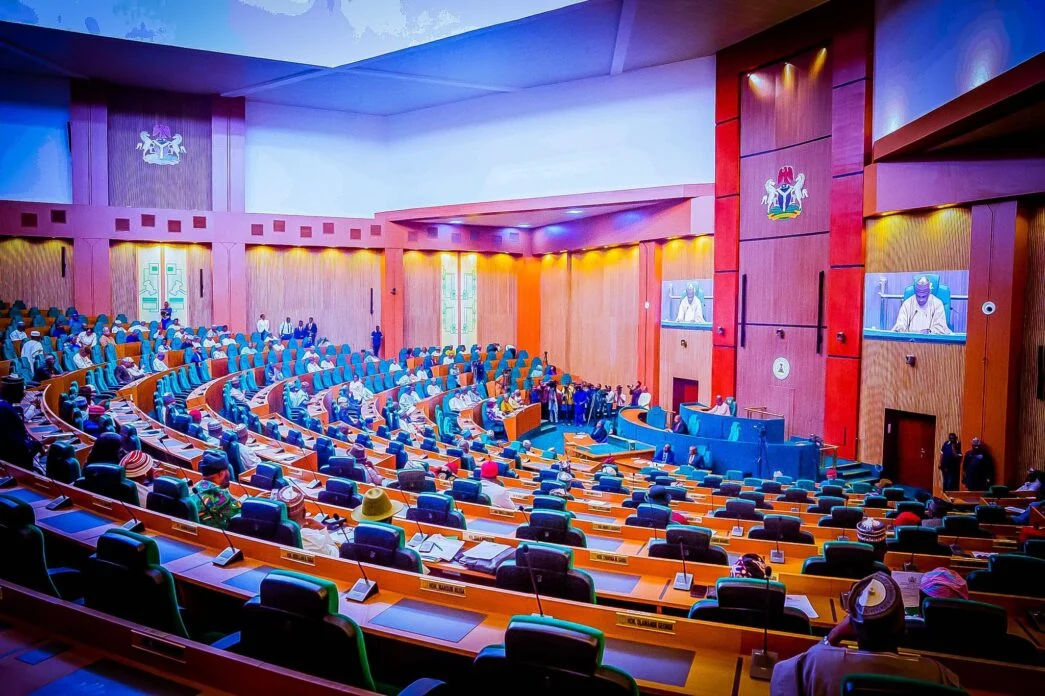
The House of Representatives on Thursday took significant legislative steps toward enhancing transparency, accountability, and operational stability at the Central Bank of Nigeria (CBN) as lawmakers concluded the second reading of a bill proposing sweeping amendments to the Central Bank of Nigeria Act, 1991.
The bill, sponsored by House Leader Prof. Julius Ihonvbere and Lagos lawmaker Jesse Onakalausi, received unanimous support during plenary. Officially titled: “A Bill for an Act to Amend the Central Bank of Nigeria Act, 1991, to allow for proper day-to-day operations, professional oversight and enhance checks and balances, and for other matters connected thereto, 2025,” the proposed legislation responds to long-standing concerns about governance lapses and inadequate oversight at the nation’s apex bank.
Over the past few years, the CBN has faced intense scrutiny over its monetary policy practices, foreign exchange management, and the controversial 2022 currency redesign. Analysts have repeatedly criticised the existing Act for concentrating executive and oversight powers in the office of the CBN Governor, creating an opaque environment around key policy decisions.
Explaining the motivation for the amendment, Onakalausi said the reforms were driven by an urgent need to strengthen governance, autonomy, transparency, and accountability at the apex bank, especially “in light of recent national and global economic realities.”
Addressing lawmakers during debate on the general principles of the bill, he stressed the CBN’s pivotal role in maintaining monetary and financial stability. “The CBN plays a central role in stabilising the financial system, ensuring monetary credibility, safeguarding price stability, and promoting public confidence in the Nigerian economy,” he said.
However, he noted that recent events had exposed deep-rooted weaknesses in the principal Act. “Developments in recent years – ranging from governance concerns, foreign exchange distortions, monetary policy inconsistency, weak oversight mechanisms, to the challenges witnessed around currency redesign and policy communication – have exposed structural gaps,” he told the House.
A key feature of the bill is the separation of the roles of CBN Governor and Board Chairman. Onakalausi argued that in most economies, the Governor manages daily operations while the Board provides oversight. “Both roles are meant to be separate to avoid conflict of interest,” he said. “The current CBN Act merges these positions, creating an avoidable concentration of power. This bill separates these roles to ensure professional oversight without interference in day-to-day operations.”
The legislation also seeks to modernise the structure of the Monetary Policy Committee (MPC), enhance its independence, and reinforce expertise in monetary decision-making. According to Onakalausi, “This bill restructures the MPC to improve expertise, independence, and transparency, aligning Nigeria with best practices seen in economies such as the United Kingdom, South Africa, the European Union, and Brazil.”
Another major reform targets the perennial misuse of Ways and Means advances, a key source of fiscal imbalance in recent years. “Section 38 has historically been one of the most abused provisions under the CBN Act,” he said. The bill caps Ways and Means financing at 10 percent of the previous year’s actual revenue to curb inflationary government borrowing.
The amendment proposal also introduces safeguards for currency and foreign exchange management. These include a mandatory 90-day notice period for major monetary policy actions such as currency redesign or demonetization accompanied by impact assessments and compulsory briefings to the National Assembly. The aim is to prevent policy shocks and strengthen communication transparency.
To reinforce accountability, the bill mandates stricter reporting requirements. The CBN would be required to submit audited accounts within two months, publish quarterly monetary policy reports, and maintain a comprehensive, publicly accessible website containing all its publications and decisions.
The bill further proposes revisions to Section 6 to stipulate “a professional Chairman separate from the Governor, experienced in economics, banking, finance, or public financial institutions,” and to Section 8, which would limit the Governor and Deputy Governors to a single six-year term. To promote institutional continuity, two Deputy Governors must also be appointed from among the bank’s internal Directors.
The reconstituted MPC will comprise the Governor, four Deputy Governors, two board members, and four external experts who must be independent and barred from holding public office.
If enacted, the legislation would represent one of the most comprehensive overhauls of the CBN Act in decades, carrying far-reaching implications for monetary governance, financial sector stability, and economic policymaking in Nigeria.