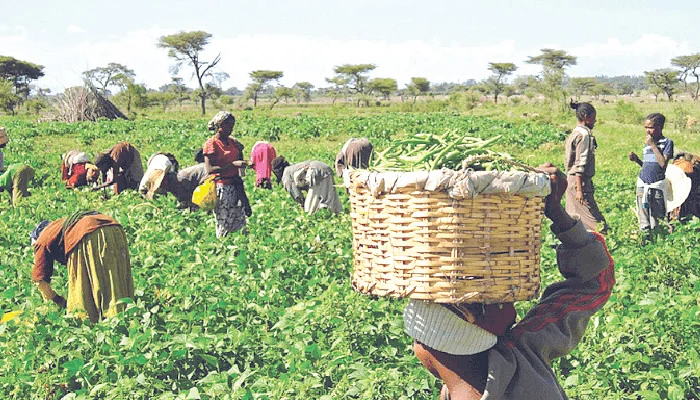
Nigeria’s agriculture sector recorded a turnover of N101.46 trillion in 2025, up from N96.46 trillion in 2024, as annual real growth rose to 2.92% from 1.69%, driven by renewed investments and favourable government policies.
The National Bureau of Statistics’ GDP figures showed a 5.18% increase in the sector’s nominal contribution to GDP year-on-year, reflecting investor interest amid initiatives such as importation waivers.
A breakdown of the 2025 performance revealed:
- Crop production: N64.41tn
- Livestock: N25.66tn
- Forestry: N6.47tn
- Fishing: N4.92tn
The sector grew 4.00% in real terms in Q4 2025, up from 2.54% in the same period of 2024, contributing 27.55% to Nigeria’s aggregate GDP for the year.
Tunde Banjoko, Chairman of the Lagos Chamber of Commerce and Industry’s Agriculture and Allied Group, attributed the growth largely to private sector investments and policy confidence. He noted, “We’ve seen a lot going into processing, palm plantation, cocoa plantation, and cocoa processing. The growth was largely driven by the private sector and some foreign portfolio investments.”
Banjoko warned that importation policies had mixed outcomes for local farmers, causing food prices to crash in local markets and discouraging production. He urged the government to balance investor interests with protections for local producers, recommending guaranteed benchmark prices for crops to safeguard farmer incomes.
Similarly, Dr Muda Yusuf, Director of the Centre for the Promotion of Private Enterprise, highlighted that while consumers benefited from lower food prices and moderated inflation, farmers faced heavy losses due to import surges of staples like rice, maize, and soybeans.
He emphasized the need for a rules-based Farm Price Stabilisation and Farmer Income Protection Framework to prevent import-induced price crashes, protect livelihoods, and strengthen agricultural value chains.
Analysts agree that agriculture remains a resilient and strategic sector for Nigeria’s economy, but sustaining growth will require policy recalibration that supports both consumers and producers while maintaining investor confidence.