Oil marketers have warned Nigerians to brace for a possible increase in the price of Premium Motor Spirit (PMS), commonly known as petrol, to about ₦1,500 per litre amid rising global energy tensions.
The National President of the Petroleum Products Retail Outlets Owners Association of Nigeria, Billy Gillis-Harry, gave the warning on Tuesday while appearing on the Channels Television programme The Morning Brief.
Speaking on the topic, “The Effect of Global War on Fuel Prices,” Gillis-Harry said Nigerians should prepare for continued volatility in fuel prices as geopolitical tensions persist.
According to him, the ongoing conflict involving the United States, Israel and Iran has pushed global energy prices higher, creating uncertainty in the international oil market.
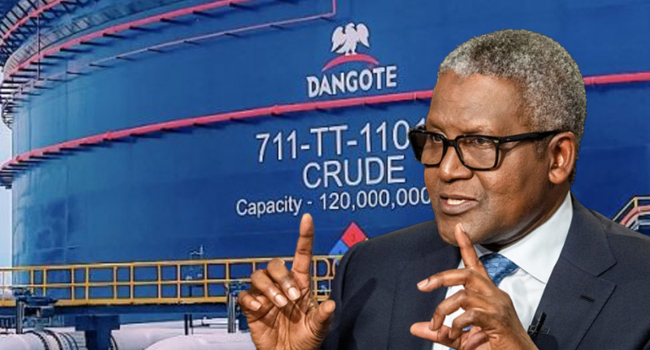
Despite rising prices, he noted that the steady supply of petroleum products from the Dangote Petroleum Refinery remains a critical factor in preventing fuel scarcity in the country.
“The reality is that if you look at the volatility in the price from what we are seeing today, the Dangote Refinery is the salvation for us, due to the consistent source of product, which is much more important at this time than anything,” he said.
He explained that while prices may continue to climb, the availability of petrol is currently more important for maintaining stability in the energy sector.
“The availability of product is much more important than pricing. The pricing we predicted has risen above ₦1,000 per litre, the other time, to ₦1,175 at the gantry,” he said.
According to Gillis-Harry, additional costs such as transportation, logistics and distribution will likely push retail prices even higher across the country.
“By the time we add the charges, logistics and others, the price will get higher and higher. So yes, ₦1,500 per litre is not far-fetched,” he added.
He urged Nigerians not to panic over the possibility of higher fuel prices, stressing that a stable supply of petroleum products is vital for businesses and economic activities.
“It should not make us panic. It is better for us to have the product available, be able to do our business, and get some level of energy security than not having it,” he said.
The warning comes amid escalating tensions in the Middle East, which have disrupted global oil markets and driven energy prices upward.
Industry observers say continued geopolitical instability could further influence fuel prices in Nigeria, especially as the country relies on international crude oil market dynamics for pricing.