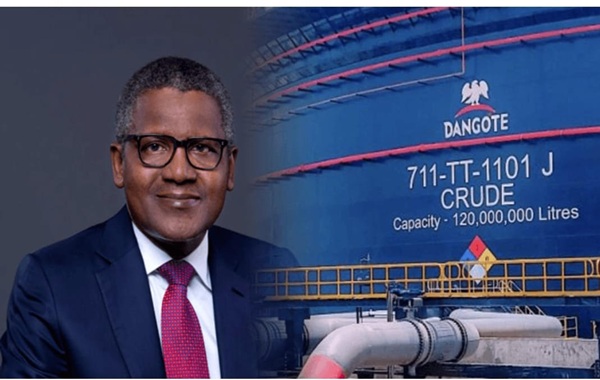
The Chief Executive Officer of the Dangote Refinery, David Bird, has clarified that the refinery purchases Nigerian crude at international benchmark prices, even under the Federal Government’s crude-for-naira initiative.
Speaking during a media briefing in Lagos on Monday, Bird emphasized that the facility does not benefit from discounted crude and remains fully exposed to global market dynamics.
“Even under the crude-for-naira arrangement, Nigerian crude is purchased at international benchmark prices, meaning the refinery does not receive discounted crude,” he stated.
Bird highlighted the extreme volatility in global oil markets, noting that crude prices surged from the mid-$60 range to nearly $120 per barrel within a week, significantly impacting import-dependent countries.
The CEO also pointed to rising logistics and operational costs:
Tanker freight rates have jumped from about $800,000 to roughly $3.5 million per shipment.
Costs such as shipping, insurance, and financing further influence the refinery’s expenditure.
Despite these pressures, the Dangote Refinery continues to operate at full capacity, processing approximately 650,000 barrels per day, with the potential to increase output to around 700,000 barrels daily.
Industry analysts note that the refinery’s scale could strengthen Nigeria’s energy security, reducing reliance on imported petroleum products and shielding the economy from global supply disruptions.
Bird reiterated that the refinery is ready to compete in Nigeria’s petroleum market under import-parity pricing, stressing the importance of equitable regulatory enforcement to sustain healthy competition in the downstream sector.
Owned by African industrialist Aliko Dangote, the Dangote Refinery is considered one of the largest single-train refining facilities in the world, strategically positioned to transform Nigeria’s downstream petroleum sector.
The Federal Executive Council (FEC) approved the Naira-for-Crude initiative in 2024, aimed at supplying local refineries with crude in Naira instead of dollars to stabilize fuel prices and the exchange rate. The government reaffirmed its commitment to the initiative in April 2025, covering both crude and refined product sales.