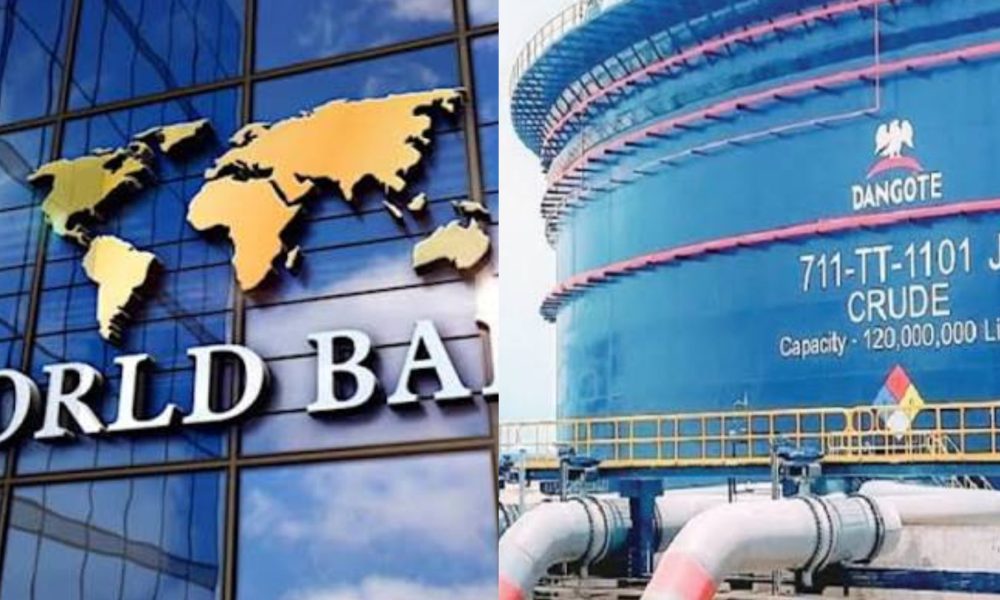
The World Bank has disclosed that imported Premium Motor Spirit (PMS), also known as petrol, is currently cheaper than fuel supplied by the Dangote Petroleum Refinery.
According to the bank, the price gap could deepen inflationary pressures in Nigeria’s economy.
In its latest Nigeria Development Update, the global lender revealed that imported petrol costs about 12 per cent less than locally refined fuel from the Dangote refinery.
The report noted that the development exposes distortions in Nigeria’s downstream petroleum pricing framework, particularly at a time when global crude oil prices remain elevated.
However, the Dangote Petroleum Refinery has denied reports of a petrol price increase.
In a statement issued by the company, a source within the refinery clarified that the current pricing structure remains unchanged.
According to the source, the refinery’s gantry price is fixed at N1,200 per litre, while the coastal price stands at N1,153 per litre.
“We are maintaining our existing price and have not introduced any new pricing for our customers,” the source stated.
The company also reiterated its commitment to ensuring consistent supply of refined petroleum products across Nigeria and other African markets.
Officials at the refinery said the facility remains focused on supporting stability in the country’s petroleum sector through reliable supply and competitive pricing.
Industry analysts say the price difference between imported petrol and locally refined fuel highlights the ongoing complexities in Nigeria’s downstream oil market.
They note that factors such as crude oil prices, exchange rate fluctuations, and logistics costs continue to influence fuel pricing across the sector.
The World Bank warned that such pricing disparities could affect inflation trends in Nigeria if not addressed through more efficient market and regulatory mechanisms.