Global oil prices surged on Monday after Iran re-closed the strategic Strait of Hormuz, escalating tensions in the ongoing Middle East conflict and raising fresh concerns about global energy supply.
The move came just a day after Tehran briefly reopened the critical waterway, citing a ceasefire agreement between Israel and Lebanon. The renewed closure was attributed to what Iran described as a blockade of its ports by the United States.
Despite the escalation, hopes of a diplomatic breakthrough continued to support global equities, even as Tehran indicated it was not planning to attend upcoming peace talks.
The Strait of Hormuz is one of the world’s most important shipping routes, with roughly one-fifth of global oil and liquefied natural gas passing through it. Any disruption to the channel typically triggers volatility in energy markets.
Oil prices had plunged on Friday after Iran announced it would allow ships to pass through the strait again. The development came amid optimism surrounding the ceasefire and diplomatic engagement.
Donald Trump told AFP that negotiations with Iran were nearing a breakthrough.
“We’re very close to having a deal,” Trump said, adding that there were “no sticking points at all” remaining in discussions with Tehran.
However, Iranian officials quickly pushed back, insisting that their stockpile of enriched uranium would not be transferred abroad under any circumstances.
On Friday, US benchmark West Texas Intermediate crude dropped more than 11 percent, while global benchmark Brent Crude fell about nine percent.
Both contracts rebounded strongly on Monday, with West Texas Intermediate climbing more than seven percent at one point and Brent gaining over six percent.
The surge came ahead of the expiration of a two-week ceasefire and following reports that a US naval destroyer had seized an Iranian vessel attempting to bypass the blockade. Tehran warned that it would retaliate.
The standoff over the blockade of Iranian ports has become a major obstacle in negotiations between Washington and Tehran. Iran’s state broadcaster cited officials saying there were currently no plans to attend the next round of Iran-US talks scheduled to take place in Islamabad, Pakistan.
Iranian news agencies Fars News Agency and Tasnim News Agency also quoted sources saying the overall atmosphere surrounding the negotiations was “not very positive,” adding that lifting the US blockade was a key condition for further talks.
The only direct negotiations so far occurred during a 21-hour session in Islamabad on April 11, which ended without a breakthrough.
In a social media post on Sunday, Trump said Washington was offering a “very fair and reasonable deal,” but warned of potential action against Iranian infrastructure if negotiations collapse.
Meanwhile, Iran’s elite Islamic Revolutionary Guard Corps warned that any vessel attempting to pass through the strait without Tehran’s approval would be treated as cooperating with its enemies.
Foreign ministry spokesman Esmaeil Baqaei described the US blockade as a violation of the ceasefire agreement.
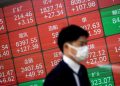
Despite geopolitical tensions, global stock markets posted gains, tracking record closes for the S&P 500 and Nasdaq Composite in New York.
Asian markets also rallied, with Tokyo, Seoul, and Taipei leading gains as the technology sector resumed the rally that had driven markets before the conflict began on February 28.
Analysts said investors were cautiously optimistic about diplomatic efforts, though the risk of further escalation remains high.
Chris Weston of Pepperstone said traders were closely watching whether diplomatic talks could salvage the fragile ceasefire.
“Market participants understand that the path to a formal agreement is unlikely to be linear and remains vulnerable to sudden changes,” Weston said.
He added that without a comprehensive agreement on Iran’s nuclear programme, the ceasefire would likely remain fragile and markets susceptible to sudden shifts in sentiment.