Electricity distribution companies have criticised the Lagos State Government’s proposed plan to phase out electricity customer band classification, warning that the move could trigger consumer unrest, worsen distortions in the power market, and potentially lead to widespread blackouts.
Officials of the power firms, who spoke anonymously due to the sensitivity of the matter, said the state government’s intention was commendable but argued that Lagos must first ensure stable electricity supply across all areas before abolishing the banding system introduced by the Nigerian Electricity Regulatory Commission in 2024.
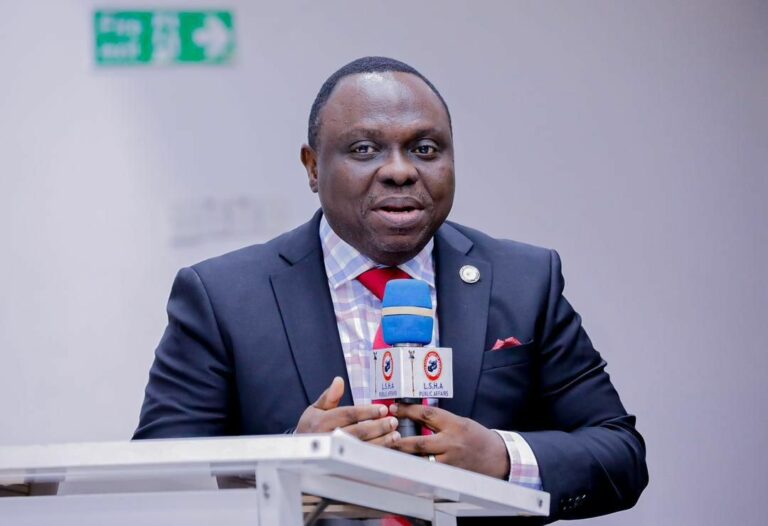
The criticism followed remarks by the Lagos State Commissioner for Energy and Mineral Resources, Biodun Ogunleye, who said during a ministerial press briefing in Alausa, Ikeja, on Monday that the state was working towards eliminating electricity band classification and guaranteeing stable electricity supply for all residents.
Under the NERC framework introduced in April 2024, electricity consumers were categorised into Bands A to E based on the number of hours of electricity supplied daily. Customers in Band A, who receive a minimum of 20 hours of electricity supply, pay cost-reflective tariffs, while those in lower bands continue to enjoy subsidised tariffs with fewer supply hours.
However, the DisCos argued that removing the classification system without significantly improving generation and supply would create serious challenges, particularly because many electricity consumers remain unmetered.
“Their intention is very good. It is a laudable intention. But there’s a difference between good intentions and practicability. We have to always think about what is practicable and what is not practicable,” one operator said.
The official acknowledged Lagos State’s strong governance structure and performance record but stressed that eliminating estimated billing and implementing uniform cost-reflective tariffs would require massive financial investment.
“To stop estimated billing, you must meter everybody, and to meter all unmetered customers, you have to pay N180,000 multiplied by the number of electricity customers in Lagos. There’s a cost element to metering,” the source added.
The operators warned that abolishing band classification while introducing full cost-reflective tariffs could provoke resistance from consumers in underserved communities currently paying subsidised electricity rates.
“Some people live in areas with stable power supply, while some are in underserved areas where they may not have electricity for days or weeks. If you now remove band classification and ask all of them to pay cost-reflective tariffs, the people without electricity will protest,” another operator stated.
According to the firms, customers in lower bands currently paying subsidised tariffs of about N68 per kilowatt-hour could face tariffs exceeding N200 per kilowatt-hour if the subsidy structure is removed.
The DisCos maintained that the current banding system was designed to encourage operators to improve supply so that more consumers could migrate to Band A, where tariffs reflect the actual cost of electricity.
“The band classification is to wake operators from their slumber to generate and supply more so that more customers can be migrated to Band A, where they pay the real cost of electricity,” one source explained.
The companies also warned that removing the classification system prematurely could politicise the Lagos electricity market and destabilise supply.
“With the way they are going, they want to politicise the Lagos power market, and that could end in blackouts if care is not taken,” the operator cautioned.
The firms argued that the focus should instead be placed on expanding electricity generation capacity and improving supply infrastructure to naturally reduce tariffs over time.
“You can only reduce tariffs by bringing in more capacity and increasing generation. If there’s enough supply, tariffs will start going down,” the source said.
According to the operators, there is nothing inherently wrong with eventually removing electricity band classification, but such a decision should only happen after adequate and stable power supply has been achieved across all customer categories.
They also raised concerns about policy continuity beyond the current administration in Lagos State, noting that future governments may adopt different approaches to electricity reforms.
Speaking earlier on Monday, Ogunleye said the Lagos State Government was committed to building a power system capable of delivering uninterrupted electricity supply without relying on customer banding.
“What we are saying is, is it impossible to have a continuous power supply? The governor has thrown the challenge and even repeated it again this morning. Is it impossible to have a 24-hour power supply?
“I strongly believe that we can do it. We have seen it before in this city. Banding is not what we want to focus our attention on,” Ogunleye stated.