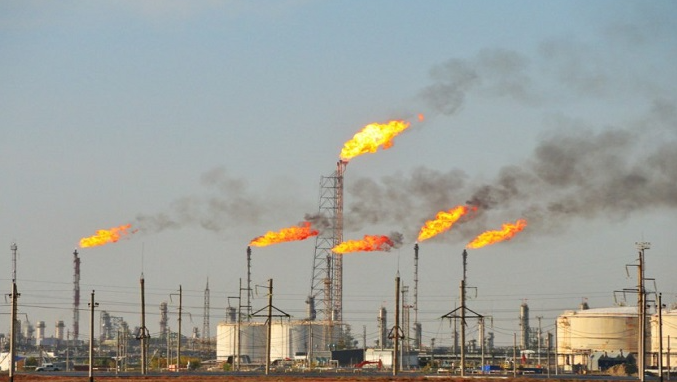
Nigeria remained one of the world’s largest gas-flaring countries in 2025, ranking among nine nations that collectively accounted for 83 percent of global gas flaring, according to the latest Global Gas Flaring Tracker Report released by the World Bank.
The report identified Russia, Iran, Iraq, Venezuela, Mexico, Libya, Algeria, Nigeria and the United States as the biggest contributors to global gas flaring during the year.
According to the World Bank, while more than 90 other oil-producing countries accounted for 54 percent of global oil production, they were responsible for only 17 percent of total gas flaring, highlighting the concentration of flaring activities among a small group of nations.
The report revealed that Nigeria experienced increases in both crude oil production and gas flaring volumes in 2025, reflecting ongoing infrastructure limitations within the country’s oil and gas industry.
Data contained in the report showed that Nigeria recorded an eight percent increase in gas flaring volumes during the year, matching an eight percent rise in crude oil production.
Despite the increase in flare volumes, Nigeria’s flaring intensity remained largely unchanged compared to 2024. This contrasts with countries such as Mexico, Russia, Algeria and Iran, which recorded notable increases in flaring intensity.
Meanwhile, Venezuela and the United States achieved improvements, reducing their flaring intensity by 11 percent and 10 percent respectively.
The report also noted that Iraq, Libya and Nigeria recorded little or no significant change in flaring intensity over the period under review.
“The share of total flaring from the top nine flaring countries—Russia, Iran, Iraq, Venezuela, Mexico, Libya, Algeria, Nigeria and the United States—represents 83 percent of total flaring in 2025,” the World Bank stated.
According to the report, inadequate gas infrastructure remains one of the primary barriers preventing Nigeria from significantly reducing gas flaring.
The World Bank explained that insufficient facilities for gathering, transporting and commercialising associated gas continue to limit efforts to utilise gas that would otherwise be flared.
The report further highlighted aging gas processing facilities and frequent operational downtime as additional factors contributing to elevated flaring levels in the country.
It noted that several major oil-producing nations have demonstrated that oil production can be sustained while maintaining significantly lower levels of gas flaring.
Countries such as Kazakhstan, Saudi Arabia and the United States were cited as examples of nations that successfully reduced flare volumes while maintaining or lowering flaring intensity.
In contrast, Mexico, the Republic of Congo and Vietnam recorded some of the largest increases in flaring intensity globally during the reporting period.
The findings reinforce calls for greater investment in gas gathering systems, processing plants and transportation infrastructure to support Nigeria’s gas commercialisation objectives and reduce environmental impacts associated with flaring.
The World Bank also observed that countries participating in the Zero Routine Flaring (ZRF) initiative generally achieved better flaring performance than non-participating nations, although overall flaring among member countries increased in 2025.
Nigeria has repeatedly committed to ending routine gas flaring and unlocking greater value from its extensive natural gas resources.
The country possesses more than 200 trillion cubic feet of proven natural gas reserves, making it one of Africa’s largest gas holders.
Over the years, successive administrations have introduced policies and programmes aimed at commercialising flared gas, reducing greenhouse gas emissions and expanding domestic gas utilisation.
However, experts say sustained investment in infrastructure, stronger regulatory enforcement and accelerated gas development projects will be critical if Nigeria is to achieve its long-standing goal of eliminating routine gas flaring and maximising the economic value of its vast gas reserves.