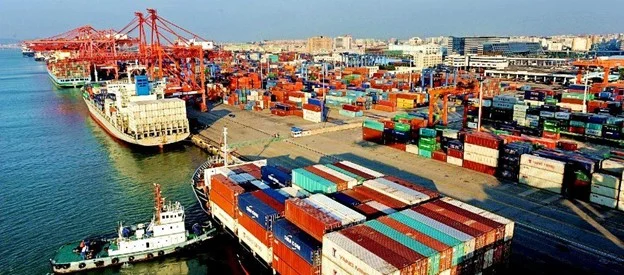
The National Association of Stevedoring Operators (NASO) has pledged to work closely with the Nigerian Ports Authority (NPA) and the Nigerian Maritime Administration and Safety Agency (NIMASA) to develop an industry-wide equipment upgrade roadmap that aligns with the operational realities of Nigerian stevedoring companies.
NASO President, Bolaji Sunmola, made the call during the 2026 Dockworkers’ Day celebration organised by the Shipping Correspondents Association of Nigeria (SCAN) in Lagos, according to a statement obtained by The PUNCH.
Sunmola stressed that the proposed equipment upgrade programme should be supported by accessible financing mechanisms to enable operators meet emerging environmental standards. He pointed to funding opportunities such as the Green Climate Fund pipeline currently being accessed through the Development Bank of Nigeria.
He warned that green port initiatives should not become an unfunded obligation for operators who lack the financial capacity to comply.
“We must also be frank: the equipment our industry deploys—the cranes, the forklifts, the terminal tractors, and the cargo-handling machinery—contributes materially to the emissions footprint of port operations. NASO is committed to actively engaging with the NPA and NIMASA to develop an industry-wide equipment upgrade roadmap,” Sunmola said.
The NASO president urged the Federal Government to integrate environmental sustainability into Nigeria’s ongoing port modernisation programme. According to him, expanding cargo-handling capacity without improving environmental performance would leave the modernisation process incomplete.
“We equally call on the Minister of Marine and Blue Economy and the NPA leadership to ensure that Nigeria’s ongoing port modernisation programme becomes the platform on which green performance standards are firmly anchored,” he stated.
Sunmola further advocated the inclusion of mandatory green performance indicators covering emissions reduction, equipment standards, waste management and cargo dwell time in all future infrastructure investments, operational upgrades and regulatory frameworks.
He also highlighted the importance of worker welfare in the sustainability agenda, noting that environmental progress must go hand in hand with safe working conditions and improved livelihoods for dockworkers.
“A green port that exposes its workers to toxic emissions, unsafe working conditions, and degraded welfare is a contradiction. The sustainability agenda must extend to the sustainability of livelihoods,” he said.
Sunmola commended SCAN for choosing the theme, “Green Ports: Sustainable Practices for Dockworkers,” describing it as a timely intervention in shaping discussions around the future of Nigeria’s maritime sector.
According to him, one of the most effective green port initiatives available to Nigeria does not require imported technology or significant capital investment but rather improved operational efficiency.
He explained that faster cargo discharge and delivery, reduced cargo dwell times, shorter vessel waiting periods at anchorage and reduced truck congestion at port gates would automatically lower carbon emissions.
“The carbon that is never emitted is the greenest of all,” he added.
The NASO president’s remarks come as the International Maritime Organization’s revised greenhouse gas strategy sets targets for at least a 20 per cent reduction in shipping emissions by 2030, with a long-term goal of achieving net-zero emissions by 2050.