The Federal Government has said the Dangote Petroleum Refinery would not have been able to commence operations under Nigeria’s former petrol subsidy regime, arguing that subsidy removal was necessary to create a viable market for private refining investment.
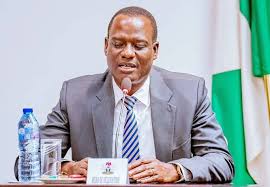
The Minister of Finance and Coordinating Minister of the Economy, Taiwo Oyedele, made this known on Wednesday in Abuja while presenting the government’s “Nigeria’s Reform Scorecard: The Benefits, Costs and Harms Prevented.”
Oyedele said the removal of the petrol subsidy and the unification of the foreign exchange market had imposed significant costs on Nigerians but argued that the reforms had prevented a deeper economic crisis and created conditions that enabled investments such as the Dangote refinery to operate.
He specifically linked the viability of the Dangote refinery to the removal of the subsidy, saying the plant could not have competed commercially if petrol had remained at the heavily subsidised price of less than N200 per litre.
“Remember, we’re importing refined products. That is to say the Dangote refinery wouldn’t have been able to start because you can’t sell at N200 per litre and queue up for the government to pay the balance of over N1,000 per litre,” Oyedele said.
According to the minister, maintaining petrol at about N200 per litre would not necessarily have guaranteed cheap and readily available fuel. Instead, Nigeria could have faced a situation where petrol remained officially cheap but became increasingly unavailable, forcing consumers to purchase the product on the black market at significantly higher prices.
Oyedele said petrol could have remained officially priced at about N185 per litre under the pre-reform path while trading for at least N3,000 per litre on the black market.
He explained that such a scenario would have made it difficult for the Dangote refinery to compete against subsidised imported petrol because a domestic refinery producing fuel at its actual cost would have needed to sell above the government-controlled pump price.
The government, he said, would then have been required to absorb the difference at a time when its finances were already under severe pressure.
Oyedele said the subsidy regime had become increasingly difficult to sustain amid weak government finances and foreign exchange shortages that constrained the importation of petroleum products.
He said Nigeria’s net external reserves had been about $3bn while the country owed more than $7bn, leaving the government with insufficient foreign exchange to sustain imports.
“That is bankruptcy. And you know we can’t print dollars because we’re not the United States of America,” he said.
Oyedele added that petroleum marketers would also have struggled to sustain imports if they were required to sell petrol at about N200 per litre while waiting for the government to reimburse more than N1,000 per litre in subsidy costs.
The Dangote refinery began selling petrol in September 2024, about 16 months after President Bola Tinubu announced the removal of the petrol subsidy during his inauguration on May 29, 2023.
Petrol was selling at around N500 per litre when the Dangote refinery commenced petrol sales. Although the subsidy had officially been removed in May 2023, the Federal Government had directed the Nigerian National Petroleum Company Limited to continue importing petrol and selling it below cost.
As the Dangote refinery increased domestic petrol production, the government subsequently removed the implicit subsidy, pushing pump prices above N1,000 per litre.
Oyedele said the broader reforms generated N15.8tn in resources for the federation between June 2023 and December 2025.
The amount comprised N5.4tn for the Federal Government, N6.5tn for the states and N3.9tn shared among Nigeria’s 774 local governments.
He explained that the savings did not appear in the Federation Account under a specific “subsidy savings” line. Instead, the impact was reflected in higher naira collections from oil and non-oil revenues following the exchange-rate adjustment and removal of the implicit foreign exchange subsidy.
The Federal Government also generated N3.1tn in incremental independent revenue during the period, mainly through remittances and surpluses from government-owned entities.
In addition, the government borrowed N11.9tn between June 2023 and December 2025, bringing the incremental resources from the three sources to N20.4tn.
Oyedele argued that government borrowing would have been significantly higher and potentially destabilising without the fiscal space created by the reforms.
However, the minister acknowledged the substantial burden the reforms had placed on Nigerians.
He said petrol prices had increased from about N185 per litre before the reforms to between N1,100 and N1,400 per litre, while the Monetary Policy Rate rose from 18.5% to 26.5%.
“We record that plainly as the cost of stabilisation, not a hidden win. Petrol at the pump has risen from roughly N185 a litre to between N1,100 and N1,400. That is a major, felt cost, and I will not stand here and tell you otherwise,” Oyedele said.
He added that a scorecard that listed only the benefits of the reforms would not provide a complete picture of their impact.
The minister also stressed that subsidy removal was not primarily introduced as a revenue-raising measure, noting that wage adjustments at N9.39tn exceeded the Federal Government’s entire savings from subsidy removal.
Between June 2023 and December 2025, the Federal Government incurred N30.64tn in incremental expenditure. Of this amount, N9.39tn went towards wage adjustments, minimum wage increases and allowances for public servants, while N9.37tn was spent on external debt servicing.
On foreign exchange reforms, Oyedele said Nigeria had previously operated multiple exchange rates, creating opportunities for arbitrage and rent-seeking while putting pressure on the country’s foreign exchange reserves.
He said the premium between the official exchange rate and the parallel market rate, which had exceeded 60% before the reforms, had fallen below 5%. Without the reforms, the government estimated that the premium could have exceeded 150%.
Nigeria’s net external reserves have also risen from less than $3bn to $34.8bn, while gross reserves stood at $52.5bn, according to the minister.
Oyedele warned that without the reforms, Nigeria could have exhausted the foreign exchange needed to import essential products, including refined petroleum products.
Despite the gains cited by the government, the minister acknowledged that household welfare remained a major concern.
He said food inflation had fallen from 24.82% to 17.52% as of June 2026, with July figures showing a further decline, but stressed that poverty and household welfare recovery remained unfinished business.
“Poverty and household welfare recovery is still classified in our own scorecard as unfinished business, not a victory lap,” he said.
Oyedele maintained that the reforms had been necessary to prevent a more severe economic crisis, arguing that the alternative could have left Nigeria with officially cheap petrol that was largely unavailable, forcing consumers to pay much higher prices on the black market.