Global bond markets rebounded on Thursday after the U.S. Treasury announced measures to support its debt market, easing investor concerns and triggering gains in stocks while pushing the dollar lower.
The U.S. Treasury said it would double the size of some buyback operations for long-duration debt to at least $4 billion, seeking to halt a rise in government bond yields that had pushed the 30-year Treasury yield to its highest level since 2007 earlier this week.
The 30-year Treasury yield edged down to 5.1869% in Asian trading after falling nine basis points in the previous session. The benchmark 10-year Treasury yield stood at 4.6427%, following a five-basis-point decline on Wednesday.
Eric Robertsen, global head of research and chief strategist at Standard Chartered, said the recent increase in long-term Treasury yields had reached a level that appeared to concern the U.S. government.
The recovery extended across other major bond markets.
In Japan, yields on Japanese government bonds fell from multi-decade highs. The 40-year JGB yield declined 9.5 basis points to 4.055%, while the 30-year yield fell 8.5 basis points to 3.995%.
German Bund futures and French OAT futures also edged higher, signalling lower yields.
The rebound followed a sharp global bond selloff earlier in the week, driven by growing concerns over government debt levels in the United States, Japan and Europe.
Heavy borrowing by technology companies to fund artificial intelligence investments and elevated oil prices also contributed to pressure on global bond markets.
The Treasury’s buyback announcement appeared to provide a temporary floor for bond prices, although some investors questioned whether the intervention could provide lasting relief.
Cusson Leung, chief investment officer at KGI, warned that greater Treasury intervention could encourage institutional investors to increase selling.
He noted that the U.S. government would still need to raise funds through the bond market, meaning the impact of buybacks could ultimately be limited.
Improved sentiment in fixed-income markets also lifted global equities.
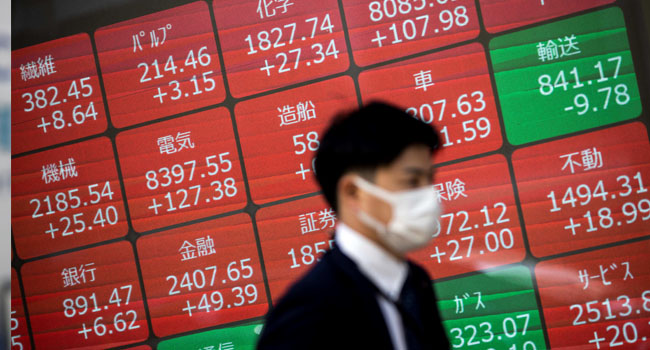
MSCI’s broadest index of Asia-Pacific shares excluding Japan rose 2%, while Japan’s Nikkei gained 1.4%.
Nasdaq futures advanced 0.4%, while S&P 500 futures rose 0.15%. EUROSTOXX 50 futures, however, eased 0.2%.
The decline in U.S. Treasury yields weighed on the dollar, which remained near a two-and-a-half-month low against a basket of major currencies at 98.87.
The euro held close to its highest level since May 29 at $1.1672, while sterling rose 0.06% to $1.3614 after gaining 0.55% in the previous session.
Analysts at OCBC said a cap on long-term U.S. yields could contribute to a weaker dollar as the U.S. seeks to preserve the attractiveness of its government debt to overseas investors.
Investor attention is also turning to the Federal Reserve’s interest-rate outlook after minutes from its latest policy meeting showed growing concerns about inflation.
The minutes indicated that several policymakers appeared open to raising interest rates, while many said borrowing costs would need to increase if inflation failed to decline towards the central bank’s 2% target.
Markets are now looking ahead to Federal Reserve Chair Kevin Warsh’s speech at the Kansas City Fed’s Jackson Hole symposium next week for further guidance on the central bank’s policy direction.
In commodities, Brent crude futures rose 0.1% to $91.69 a barrel, while U.S. crude futures gained 0.2% to $86.00 per barrel.
Shipping activity through the Strait of Hormuz also slowed on Wednesday, with most shipowners continuing to avoid the key waterway amid uncertainty over its reopening following a blockade during the U.S.-Israeli war against Iran.
Spot gold fell 0.8% to $4,484.09 an ounce as investors shifted back towards risk assets following the improvement in bond-market sentiment.