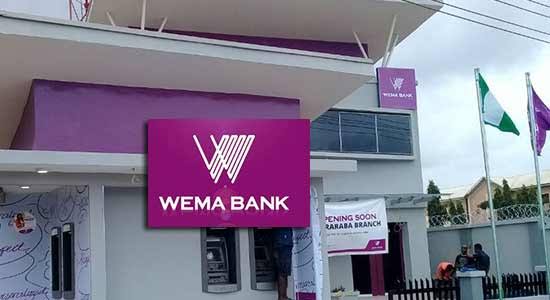
Wema Bank has strengthened its digital banking offering through an upgraded version of its ALAT platform, introducing voice banking and other technology-driven features designed to make everyday financial transactions easier.
The upgraded platform, known as ALAT: The Evolution, was launched in January 2026 as the latest development in Wema Bank’s digital banking strategy.
One of its major features is SAW, an AI-powered voice banking assistant that allows customers to interact with their banking app using voice commands. Instead of manually navigating through several screens for certain transactions, customers can speak to the assistant and request banking services.
The introduction of voice banking represents another step in the development of digital financial services in Nigeria.
Banking applications have traditionally required customers to tap through menus, enter account numbers and complete several steps before a transaction can be processed.
Wema Bank’s new system is designed to make some of these activities more natural and hands-free.
According to the bank, SAW allows users to carry out everyday banking activities through voice commands. The platform is designed to understand individual users and respond to their requests.
Customers can use voice banking for activities such as checking their account balance, transferring funds and paying bills.
The ALAT platform also promotes voice-based access to other services, including airtime purchases, savings goals and loan applications. Wema Bank’s current ALAT platform describes SAW as an assistant that can help users check balances, track spending and send money through voice interaction.
Security is an important part of the system.
Before customers can use SAW, they must complete a setup process within the ALAT application. This includes agreeing to the relevant terms, choosing a preferred language and voice, training the system to recognise their voice and completing facial validation.
The platform currently provides language options including English, Yoruba, Igbo and Hausa during voice-banking setup. This could make the technology more accessible to a wider range of Nigerian users.
The use of local languages is particularly relevant in Nigeria, where millions of people speak languages other than English as their first or preferred language.
By allowing customers to select different language options, the system has the potential to make digital banking more accessible to people who may find traditional banking interfaces difficult to navigate.
Wema Bank has also introduced other features alongside voice banking.
One of them is Tap & Pay, which allows compatible phones to send or receive money by tapping the devices together. The feature is designed to reduce the need for customers to manually enter account numbers when transferring funds.
Another feature is uptime prediction.
The purpose of this feature is to provide customers with information about service availability and help them plan transactions. This is important because customers increasingly depend on digital banking applications for urgent payments and transfers.
The upgraded ALAT platform is therefore designed around convenience, accessibility and improved digital interaction.
Wema Bank has described the upgrade as part of its efforts to create a smarter and more intuitive banking experience.
The bank’s Managing Director and Chief Executive Officer, Moruf Oseni, said the development was driven by the need to improve efficiency, reliability and convenience in digital banking.
The introduction of voice banking also reflects a wider trend in financial services.
Banks around the world are increasingly using artificial intelligence and automation to improve customer service. AI-powered assistants can help customers find information, complete routine activities and navigate financial platforms.
For banks, these technologies can also reduce the pressure on traditional customer-service channels by allowing customers to complete some basic tasks independently.
However, the use of artificial intelligence in banking also creates the need for strong security measures.
Financial transactions involve sensitive customer information, meaning banks must ensure that voice-based systems cannot easily be manipulated or used by unauthorised individuals.
Wema Bank’s setup process includes voice training and facial validation, while the bank’s information also points to secure verification procedures for voice banking.
The development is particularly significant because Wema Bank has built a strong identity around digital banking.
ALAT was launched as a fully digital banking platform and has continued to expand its services. The current ALAT platform says it has more than five million Nigerians using the service.
The upgraded platform also allows customers to open accounts digitally.
According to ALAT, customers can download the application, select “Open an Account” and follow the registration process. The service requires a phone number and valid identification, while BVN is recommended for access to full features.
This means that the bank is attempting to provide customers with a complete digital banking experience, from opening an account to carrying out everyday transactions.
The development could also increase competition among Nigerian banks.
As customers become more comfortable using smartphones for financial services, banks that provide faster and more convenient digital experiences may have an advantage in attracting younger customers.
Young Nigerians in particular have become accustomed to completing many activities through mobile applications, including shopping, communication, transportation and entertainment.
Banking is increasingly becoming part of that digital lifestyle.
Wema Bank’s investment in ALAT suggests that the institution wants to remain competitive in this changing environment.
The introduction of voice banking may also benefit customers with accessibility needs by reducing dependence on small touchscreen buttons and complicated menus.
Instead, users can communicate with the banking application through spoken instructions.
However, customers will still need to follow the bank’s security requirements and ensure that their devices and account credentials remain protected.
The growth of digital banking means customers also have a responsibility to protect their personal information, passwords and authentication details.
Overall, Wema Bank’s ALAT upgrade represents a significant development in Nigeria’s digital banking space.
The combination of voice banking, tap-and-pay technology, uptime prediction and other digital features shows how Nigerian banks are increasingly using technology to change the way customers interact with financial institutions.
As digital banking continues to grow, innovations such as SAW could become more common across the financial sector.
For Wema Bank, the challenge will be to ensure that the technology remains reliable, secure and easy to use while continuing to introduce features that meet the changing expectations of customers.