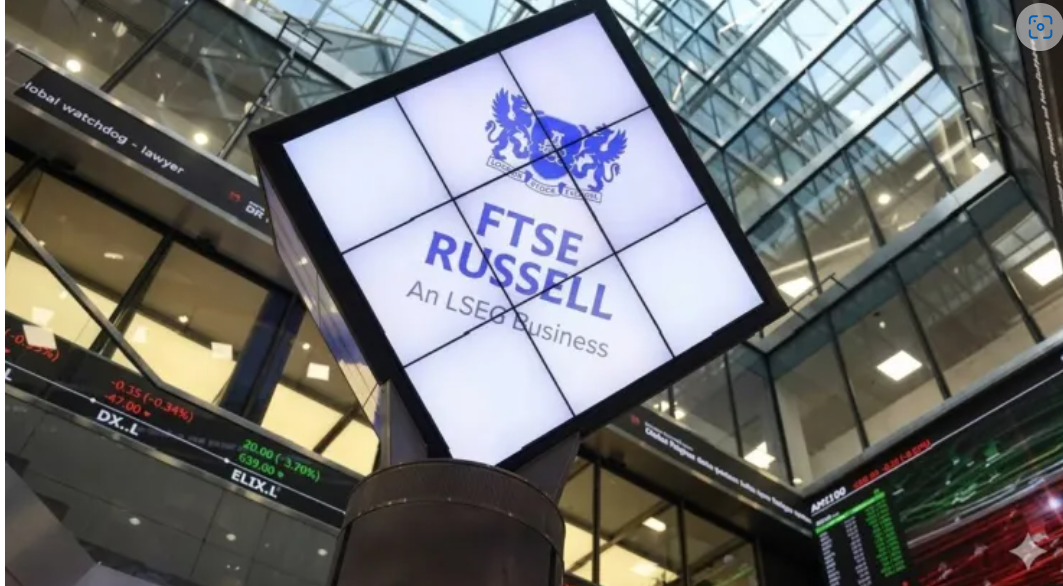
Ten major Nigerian companies have been confirmed as eligible stocks for the FTSE Russell Frontier Index Series, marking another major development as Nigeria prepares to return to the global Frontier Market classification.
The companies named include Guaranty Trust Holding Company (GTCO), Zenith Bank, First HoldCo, Aradel Holdings, MTN Nigeria Communications, Dangote Cement, Stanbic IBTC Holdings, Nestlé Nigeria, Nigerian Breweries and Presco.
FTSE Russell released the list as part of its September 2026 index review. The companies have been placed in the Large Cap category of the Frontier Index Series and are expected to gain greater visibility among international investors.
The development comes less than three weeks before Nigeria’s planned return to Frontier Market status.
FTSE Russell has confirmed that Nigeria’s reclassification from Unclassified to Frontier Market status will take effect from the opening of trading on September 21, 2026. The move will mark Nigeria’s return to the FTSE Frontier Market universe after the country was removed from the classification in 2023.
The latest list is important because FTSE Russell indexes are widely followed by international investors and fund managers. Companies that qualify for inclusion can receive increased attention from institutional investors whose investment decisions are linked to global market benchmarks.
The ten Nigerian stocks represent several major sectors of the economy.
The banking sector is represented by GTCO, Zenith Bank, First HoldCo and Stanbic IBTC Holdings. The telecommunications sector is represented by MTN Nigeria, while Dangote Cement represents the industrial sector.
Other companies on the list include Aradel Holdings in the energy sector, Nestlé Nigeria and Nigerian Breweries in consumer goods, and Presco in the agricultural and industrial space.
The inclusion is particularly significant for large Nigerian companies because increased international visibility could encourage greater foreign participation in their shares.
Nigeria’s return to Frontier Market status follows improvements in several areas that had previously raised concerns among international investors. These included foreign-exchange liquidity, the ability of investors to repatriate capital and accessibility of the Nigerian capital market.
FTSE Russell’s decision comes after the country was placed under review following reforms aimed at improving the investment environment.
Nigeria’s previous removal from the FTSE Frontier Market classification was linked largely to problems surrounding foreign-exchange availability and difficulties faced by international investors trying to move funds into and out of the country.
The latest development suggests that the country’s capital market has made sufficient progress for FTSE Russell to restore its Frontier Market classification.
Market analysts believe the reclassification could provide a boost to the Nigerian Exchange because international funds that track FTSE Frontier indexes may need to reassess their exposure to Nigerian equities.
The impact, however, is not expected to be limited to passive investment funds.
International fund managers who previously avoided Nigerian equities because of concerns about market accessibility could also begin paying closer attention to the country’s largest and most liquid companies.
This could potentially increase demand for some of the newly eligible stocks.
GTCO and Zenith Bank, for example, are among Nigeria’s biggest financial institutions and have substantial investor interest. Dangote Cement is the country’s largest listed company by market capitalisation, while MTN Nigeria is one of the most valuable companies on the Nigerian Exchange.
The inclusion of these companies therefore gives international investors access to some of the biggest businesses operating in Nigeria.
The development could also help improve liquidity in the Nigerian equities market.
Foreign investors have accounted for a relatively small portion of trading activity on the Nigerian Exchange in recent years, with domestic investors driving most transactions. Analysts believe greater international participation could increase trading activity and improve price discovery for large, liquid Nigerian companies.
The return to the Frontier Market classification is also being viewed as an opportunity for Nigeria to rebuild its position among international investors.
Temi Popoola, Group Managing Director and Chief Executive Officer of NGX Group, said the country’s return creates an opportunity to deepen the capital market, increase international participation and mobilise more long-term capital for Nigerian businesses.
He also stressed that the priority should now be to turn greater international visibility into stronger participation, deeper liquidity and increased capital formation.
The latest FTSE Russell list is therefore being closely watched by investors and market operators.
The ten companies will not necessarily receive identical levels of foreign investment. Their eventual weightings within the index will depend on factors such as market capitalisation, free float and other index eligibility requirements.
FTSE Russell has also stated that the changes in its September review file were not yet final as of September 3. The review file is expected to become final after the close of business on September 7, ahead of the September 21 implementation date.
For Nigerian investors, the development could create increased attention around the country’s biggest listed companies in the weeks ahead.
For international investors, it provides a new opportunity to gain exposure to Nigerian businesses through a market that is once again being recognised within the global Frontier Market framework.
The reclassification also comes at a time when Nigeria’s stock market has experienced significant growth, supported largely by domestic investors and strong performances from several large companies.
However, analysts have cautioned that maintaining international investor confidence will require continued improvements in foreign-exchange liquidity, capital repatriation and overall market accessibility.
Nigeria’s return to the FTSE Frontier Market universe is therefore not the end of the process. It represents the beginning of another stage in the country’s efforts to attract international capital and strengthen its financial markets.
With GTCO, Zenith Bank, First HoldCo, Aradel Holdings, MTN Nigeria, Dangote Cement and the other named companies now eligible for the Frontier Index Series, investors will be watching closely to see how the new classification affects trading activity and foreign investment when it officially takes effect on September 21.
The development represents an important moment for Nigeria’s capital market and could give some of the country’s largest listed companies greater exposure to investors around the world.