The Federal Government has intensified efforts to reform Nigeria’s road transportation system as it seeks to position mobility and logistics infrastructure as a key component of the country’s ambition to build a $1 trillion economy.
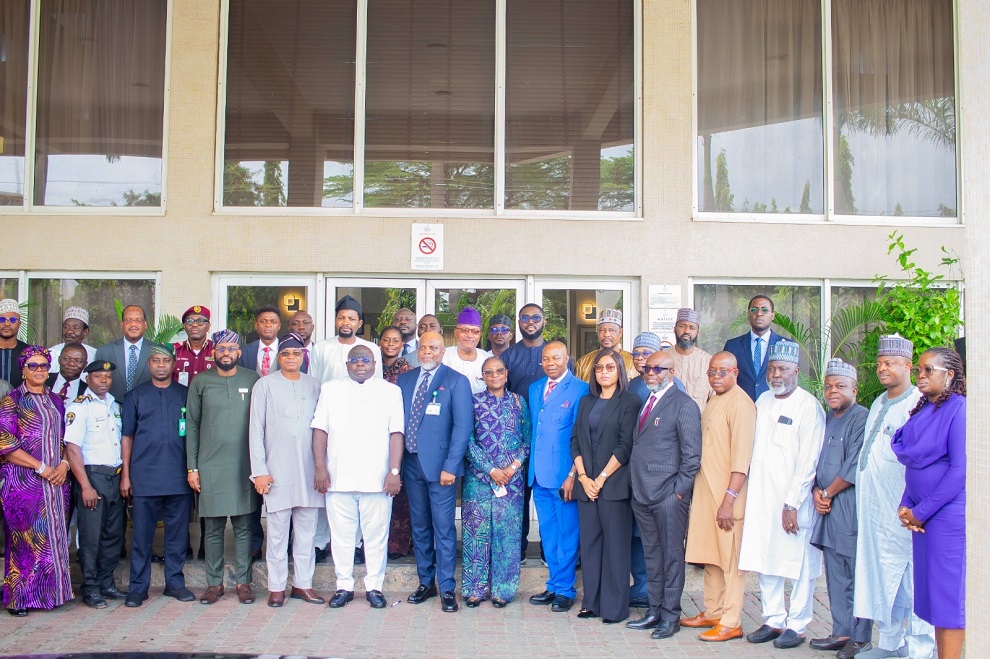
Government officials, transport operators, road-safety institutions and private-sector representatives met in Abuja to examine measures for improving efficiency, safety, connectivity and investment across the road transport industry.
Senior Special Assistant to the President on Transportation and Mobility, Adetokunbo Ademola Ade-John, said the government wants transportation to play a greater role in economic growth and national productivity.
The meeting also involved Segun Obayendo, Technical Adviser to the Vice President on Transportation, Logistics and Innovation.
Transport Goes Beyond Moving Passengers
Nigeria’s road transportation system is particularly important to commerce because it supports the movement of goods between farms, factories, markets, ports and consumers.
An inefficient transport system consequently creates costs throughout the economy.
Longer journey times increase fuel consumption, while poor infrastructure can raise vehicle maintenance expenses and increase losses for companies transporting perishable products.
Those costs can eventually affect the prices consumers pay.
The government’s reform effort is therefore seeking to treat transportation not simply as a mobility issue but as economic infrastructure.
Lagos Transport Model Comes Under Spotlight
The engagement featured a presentation by Lagos Metropolitan Area Transport Authority Managing Director Abimbola Akinajo on the LAMATA experience.
Lagos has invested in a more integrated public-transport framework involving buses, rail and supporting infrastructure.
The Abuja discussion provides an opportunity for policymakers to examine elements of that experience that could inform transport planning elsewhere, while recognising that different cities and states have distinct infrastructure and financing requirements.
The meeting also featured a technical session titled “Repositioning Road Transport for $1 Trillion Dollar Economy.”
Road Safety Forms Part of Economic Strategy
The Federal Road Safety Corps presented the National Road Safety Advisory Council Status Report, putting safety alongside logistics and infrastructure as a component of the reform discussion.
Road accidents create substantial human costs but also have economic consequences through healthcare expenses, damaged goods and vehicles, productivity losses and transport disruptions.
Improving safety can therefore contribute to a more efficient transport system.
Operators Join Reform Discussion
Participants included representatives of the Federal Ministry of Transportation, Nigeria Police Force, Joint Revenue Board, Nigerian Association of Road Transport Owners and National Union of Road Transport Workers.
The Ogun State Commissioner for Transportation and chairman of the Nigerian Transport Commissioners Forum also participated.
Bringing those institutions together is significant because road transportation cuts across different levels of government and several regulatory agencies.
Issues ranging from road construction and vehicle standards to taxes, levies, traffic enforcement and commercial transport operations can involve different authorities.
Poor coordination can increase costs for operators.
Turning Reform Into Investment
For the government’s $1 trillion economic ambition, transport reforms would need to produce measurable improvements in logistics costs, journey times, safety and connectivity.
Infrastructure investment will also remain critical.
Nigeria’s large population and extensive domestic market mean economic growth depends partly on the ability to move people and goods efficiently between production and consumption centres.
The Abuja engagement establishes areas policymakers and industry participants want to address.
The larger test will be translating those discussions into coordinated reforms and investments capable of reducing the cost of moving goods and people across Africa’s most populous country.