The Federal Government has renewed efforts to advance the proposed Nigeria-Libya Gas Pipeline, opening discussions on a formal framework that could create another export route for Nigerian gas through North Africa to international markets.
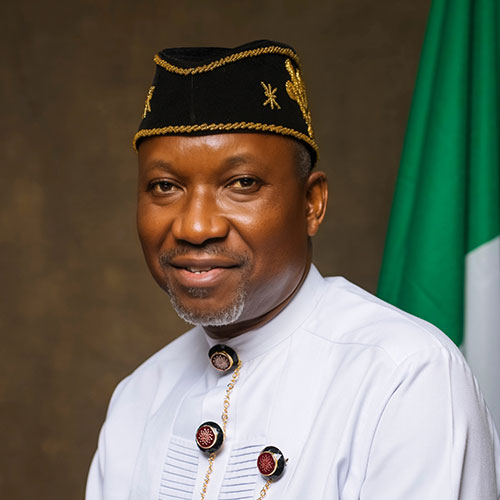
Minister of State for Petroleum Resources (Gas), Ekperikpe Ekpo, disclosed the initiative during engagements at Gastech 2026 in Bangkok, Thailand, where Nigeria has been courting investors, energy companies and governments.
The discussions form part of the government’s effort to turn Nigeria’s estimated 215.19 trillion cubic feet of proven natural gas reserves into increased investment, industrial development, exports and employment.
Nigeria, Libya Consider MoU
Momentum around the pipeline followed discussions between Ekpo and Libya’s Minister of Oil and Gas, Khalifa Rajab Abdulsadek.
Under the proposed framework, Nigeria and Libya would explore signing a Memorandum of Understanding and creating a joint technical team.
The team would be expected to examine the project’s feasibility, financing requirements, infrastructure, security considerations and commercial viability.
NNPC Limited is expected to lead Nigeria’s participation in the bilateral initiative.
The development represents an attempt to move the pipeline beyond the conceptual stage towards a more formal project structure.
However, discussions remain preliminary. An MoU or technical assessment would not by itself mean construction has been approved or financing secured.
The eventual viability of such a long-distance pipeline would depend on engineering, security, financing, transit arrangements and long-term demand.
New Route to International Markets
If eventually developed, the Nigeria-Libya pipeline could potentially provide another route for moving Nigerian natural gas through North Africa towards European markets.
That would complement Nigeria’s existing liquefied natural gas exports while potentially diversifying the country’s routes to international consumers.
The government has increasingly presented natural gas as both a transition fuel and an important component of Nigeria’s industrialisation strategy.
But converting reserves into revenue requires substantially more investment in processing facilities, pipelines, LNG infrastructure and domestic distribution.
FG Courts International Investors
The Libya discussions were part of broader meetings held by Ekpo at Gastech.
The government said its engagements focused on gas production, infrastructure, LNG expansion, industrialisation and international market diversification.
The underlying challenge is significant.
Nigeria has large gas reserves, but infrastructure limitations have historically constrained the country’s ability to convert those resources into electricity, industrial feedstock and export earnings.
New pipelines and LNG facilities could increase monetisation, but major projects require substantial long-term capital commitments.
Seplat Eyes Higher Gas Production
Among the companies involved in discussions was Seplat Energy, which outlined initiatives that could increase its gas production to as much as two billion standard cubic feet per day, including projects associated with ANOH, western operations and offshore assets.
Other potential developments discussed around Nigeria’s gas expansion include floating LNG and additional processing infrastructure.
For the government, attracting investment into such projects could support its objective of using gas to supply power generation, industries and international markets simultaneously.
The proposed Nigeria-Libya pipeline is still at an early stage, meaning its ultimate cost, route, capacity and completion timetable have not yet been established in the material reviewed.
But the decision to pursue an MoU and joint technical assessment indicates Abuja is seeking additional options for connecting Nigeria’s enormous gas reserves with international demand.