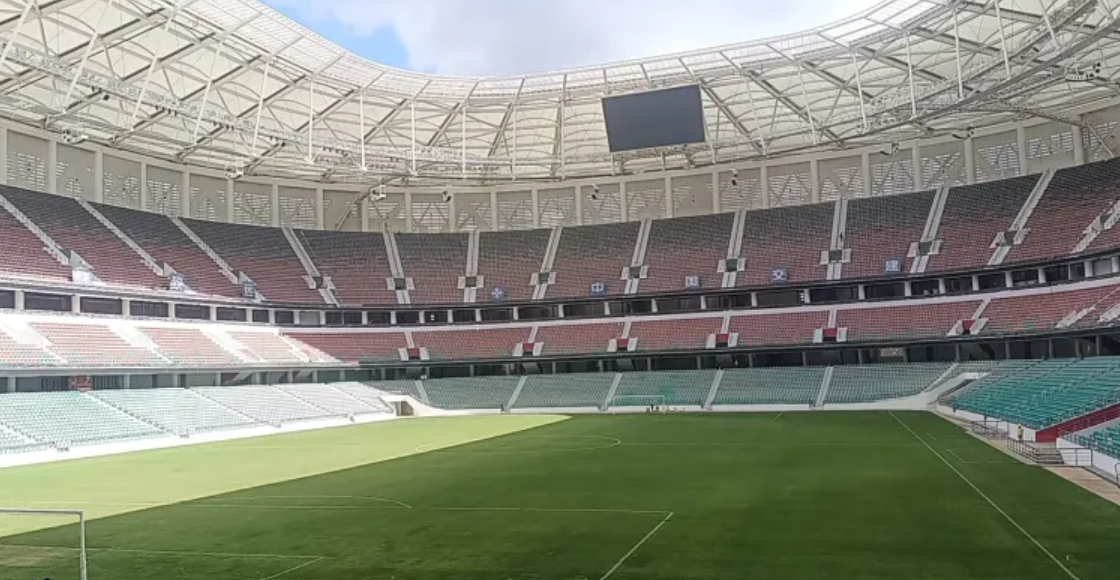
The Confederation of African Football has inaugurated the coordination headquarters for the 2027 Africa Cup of Nations in Dar es Salaam, Tanzania, as preparations intensify for the continent’s first three-country-hosted edition of the tournament.
The inauguration took place on Wednesday, November 25, 2026, with representatives of CAF and the three host nations in attendance.
Kenya, Tanzania and Uganda will jointly stage the competition, which is scheduled to run from June 19 to July 17, 2027.
The new headquarters will serve as a central location for planning, coordination and operational oversight as the football governing body works with the host countries to prepare for the tournament.
The arrangement is expected to strengthen communication between CAF and the national authorities responsible for delivering the competition.
Officials attend inauguration
Several senior football and government officials attended the inauguration ceremony in Dar es Salaam.
They included CAF Third Vice President Pierre-Alain Mounguengui and CAF General Secretary Samson Adamu.
Kenya was represented by its Cabinet Secretary for Youth Affairs, Creative Economy and Sports, Salim Mvurya.
Tanzania’s Minister of Information, Culture, Arts and Sports, Paul Makonda, also attended, alongside Uganda’s Minister of State for Sports, Peter Ogwang.
Football administrators from the three countries were also present.
They included Football Kenya Federation President Hussein Mohammed, Tanzania Football Federation President Wallace Karia and a representative of the Federation of Uganda Football Associations, Ronnie Kalema.
Their presence reflected the involvement of national sports authorities and football organisations in preparations for the tournament.
Speaking on behalf of CAF President Patrice Motsepe, Mounguengui thanked Tanzania for hosting the coordination headquarters.
CAF General Secretary Samson Adamu said senior CAF staff members would move into the new offices in the coming days as preparations continued.
Three countries prepare for a major tournament
The 2027 AFCON will be a historic edition because it will be staged across Kenya, Tanzania and Uganda.
Joint hosting creates opportunities for the three countries to share the organisational responsibilities and showcase their sporting facilities, tourism attractions and cultural heritage.
However, it also requires close coordination across national borders.
Planning will involve several areas, including stadium readiness, transportation, accommodation, security, broadcasting, medical services and movement of teams and supporters.
The coordination headquarters is intended to provide a central structure through which CAF and the host nations can manage these responsibilities.
CAF also confirmed that Kenya and Uganda would host satellite operations offices to support the coordination and delivery of the competition.
The additional offices are expected to help maintain communication and ensure that planning activities are not concentrated in Tanzania alone.
Economic and tourism opportunities
Hosting AFCON can create opportunities for tourism, hospitality, transportation and other sectors.
The arrival of football teams, officials, supporters, media organisations and sponsors can generate demand for hotels, restaurants, local transport and tourism services.
The tournament may also provide international exposure for the host cities and encourage investment in sporting infrastructure.
For the three countries, the event represents an opportunity to demonstrate their ability to organise a major international sporting competition.
However, successful hosting will depend on effective planning and the timely completion of all necessary facilities.
CAF and the host governments will need to ensure that stadiums, training grounds, accommodation and transport systems meet the requirements of a major continental competition.
The coordination headquarters is therefore an important organisational step, but it does not by itself confirm that every host facility is ready.
With the tournament scheduled for June 2027, the coming months will be important for monitoring infrastructure work and other preparations.
The joint hosting arrangement is expected to attract considerable attention from football supporters across Africa, particularly because it brings three East African nations together for one of the continent’s biggest sporting events.