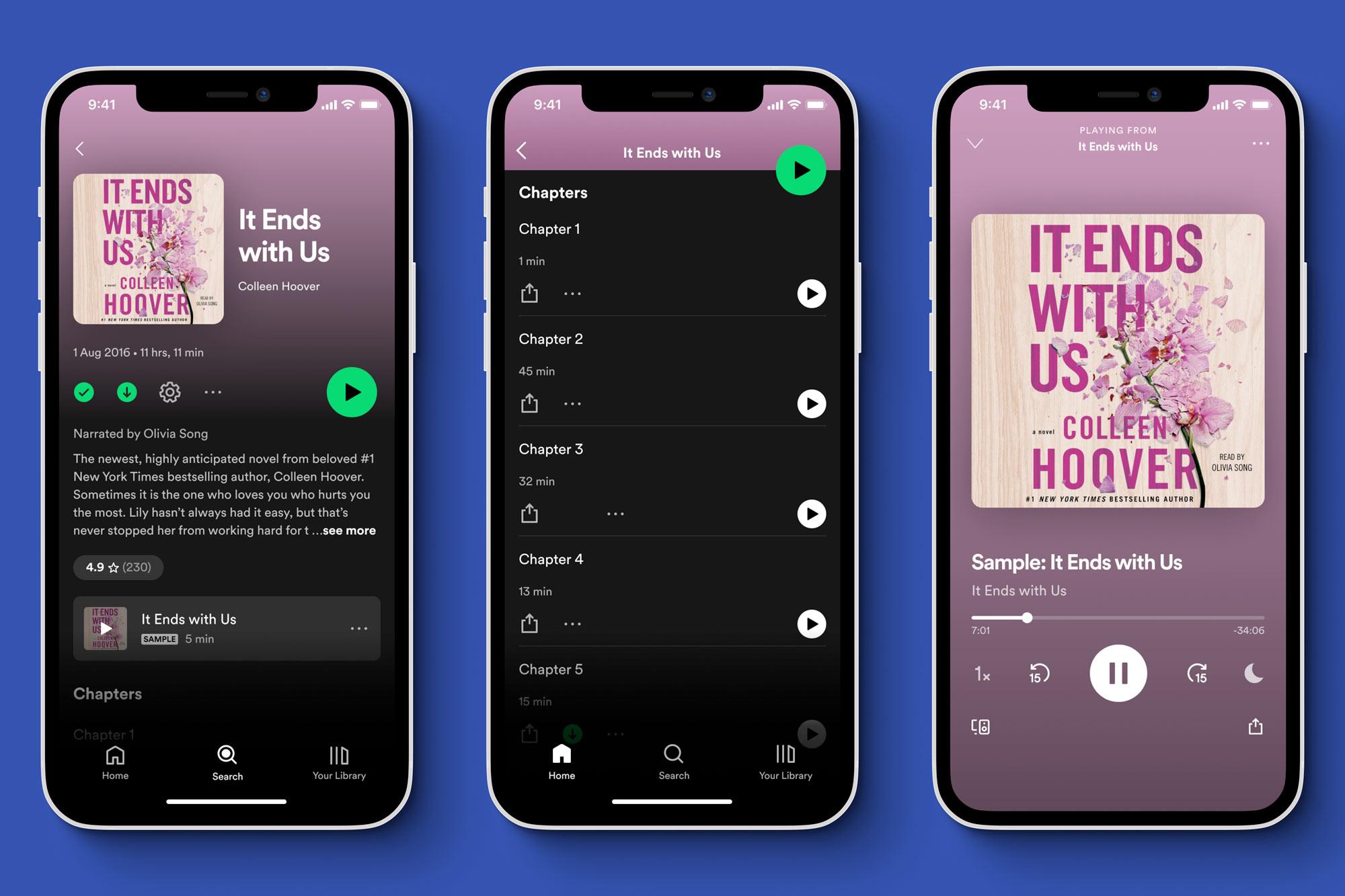
Global audio-streaming company Spotify has launched its audiobook service in Nigeria, bringing more than 350,000 titles to the market as it expands its digital entertainment offering beyond music and podcasts.
The service became available in Nigeria on October 14, according to reports published by BusinessDay and The Guardian.
The launch forms part of Spotify’s broader international expansion of audiobooks, with the company seeking to make spoken-word content more accessible to consumers while providing authors and publishers with additional distribution opportunities.
Under the Nigerian pricing arrangement reported by BusinessDay, eligible users can subscribe to Audiobooks+ for ₦2,300 monthly, which includes 15 hours of listening. Additional listening time can be purchased, while individual titles are also available for separate purchase.
The new offering gives Nigerian users another way to access books during commutes, walks, exercise and other daily activities. It also introduces an alternative for consumers who prefer listening to reading from a physical book or digital screen.
For Spotify, audiobooks represent an opportunity to increase engagement with existing users and diversify revenue beyond its established music and podcast businesses.
The service could also provide Nigerian writers and publishers with a broader route to reach readers. Through Spotify for Authors, eligible creators can distribute audiobook titles and access information about audience engagement.
However, the commercial benefits for local publishers will depend on the availability of Nigerian content, the cost of audiobook production, discoverability and the earnings creators can generate from the platform.
Producing an audiobook typically requires narration, recording, editing and quality control. Independent authors may therefore need to evaluate production costs against expected demand before investing in audio editions.
Pricing is another important consideration. Nigerian consumers already spend on mobile data, entertainment subscriptions and other digital services. Spotify will need to demonstrate that its audiobook offering provides sufficient value to attract regular paying users.
The launch also raises questions about local-language content and the visibility of Nigerian authors within a large international catalogue. While the initial library provides substantial choice, its impact on Nigeria’s publishing industry will depend partly on how much locally relevant content becomes available.
Spotify has introduced features intended to make audiobook listening more convenient, including offline downloads and tools that help users move between print and audio versions of supported books.
For Nigeria’s digital media industry, the development represents a new distribution opportunity and another example of global platforms extending their services into local markets.
Whether the service can build a substantial Nigerian audience will depend on affordability, catalogue relevance and the ability of authors and publishers to turn access to a global platform into sustainable income.