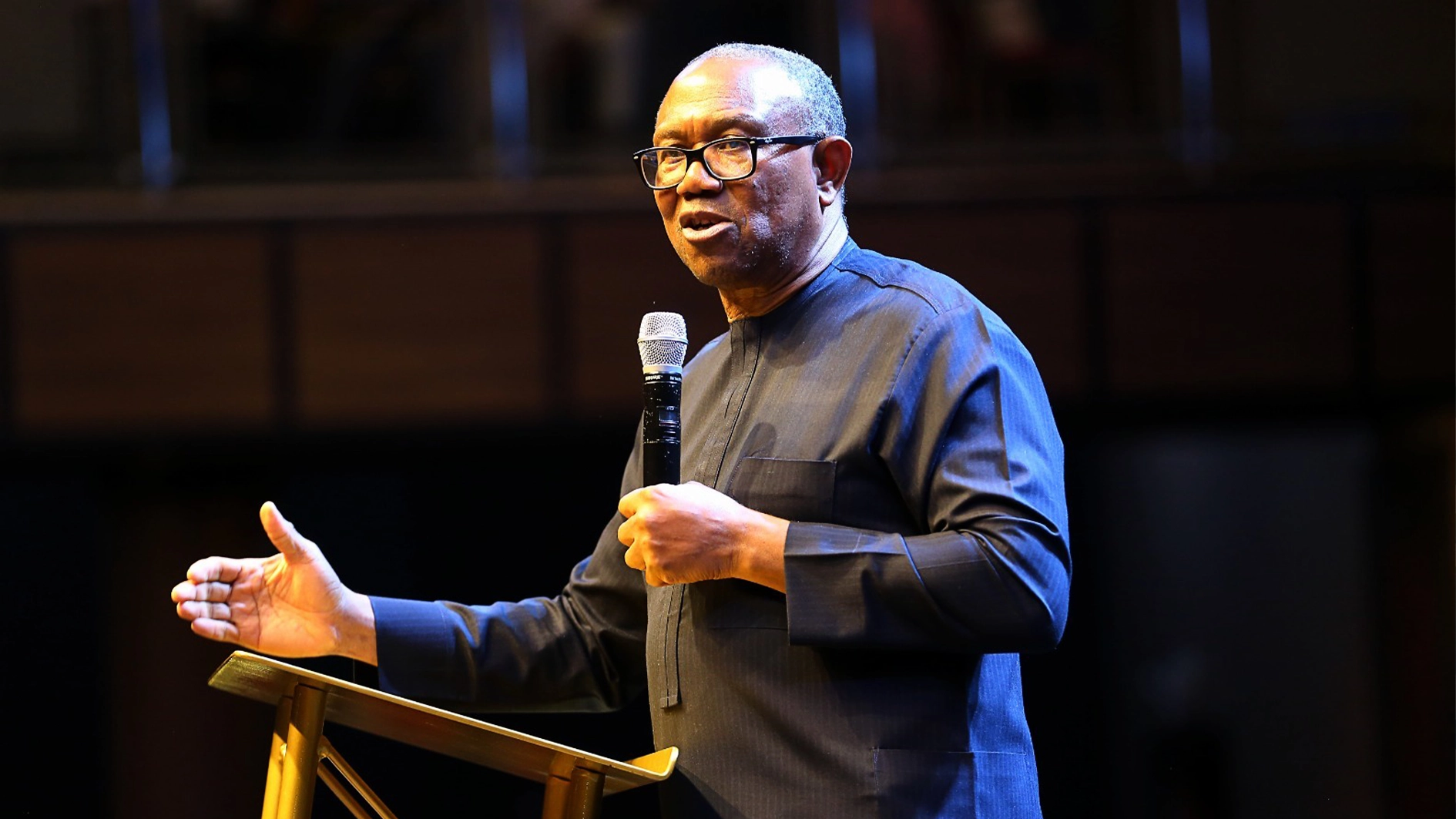
The presidential candidate of the Nigeria Democratic Congress (NDC), Peter Obi, has clarified his comments urging Nigerians living abroad to reject requests for money from relatives at home, saying his message was not intended to make people abandon their families.
Obi’s remarks at a town hall meeting with Nigerian supporters in Manchester, United Kingdom, triggered a political debate over the role of diaspora remittances in supporting households affected by economic hardship.
Following criticism from opposition parties and other commentators, the former Anambra State governor said his message had been misrepresented. He stressed that he recognised the contributions of Nigerians abroad who send money home to pay for school fees, medical bills, rent and food.
Obi said his concern was that Nigeria should not remain a country where millions of people depend on relatives overseas to meet their basic needs.
Opposition parties criticise the comments
The remarks drew criticism from the Labour Party, the New Nigeria Peoples Party (NNPP) and the Social Democratic Party (SDP).
According to The PUNCH, critics argued that discouraging financial support from abroad could place additional pressure on vulnerable households without necessarily producing political change.
For many Nigerian families, remittances help cover essential expenses that may be difficult to meet through local earnings alone. Such transfers can support education, healthcare, accommodation and daily living costs.
The criticism therefore centred on the possible consequences of Obi’s message for families that depend on relatives working overseas.
Supporters of the NDC candidate, however, defended his remarks as a call to address the underlying governance and economic problems that make many households dependent on financial assistance from abroad.
Obi says his concern is dependence on relatives abroad
In his clarification, Obi said he valued the sacrifices made by Nigerians in the diaspora and was not asking them to abandon their loved ones.
Instead, he argued that remittances should not become a permanent substitute for effective governance, economic opportunity and a system capable of supporting citizens through employment and public services.
The distinction is important because the original comments and the subsequent clarification have become part of a wider debate about how political leaders should address hardship.
One side of the debate focuses on the immediate role remittances play in keeping households afloat. The other asks whether long-term dependence on money from abroad can compensate for weaknesses in the domestic economy.
Diaspora engagement enters the 2027 political debate
The controversy comes as political parties and presidential candidates begin positioning themselves ahead of the 2027 general elections.
Nigerians living abroad remain an important part of the country’s economic and social networks, particularly through the money they send to family members.
The discussion has also highlighted the challenge politicians face when communicating policy ideas in a highly polarised political environment. A statement about household support can quickly become a debate about poverty, governance and personal responsibility.
Obi’s clarification establishes his stated position, but it does not remove the broader questions raised by the controversy: how to protect families facing immediate hardship and how to create an economy in which fewer households need to rely on relatives abroad for basic survival.