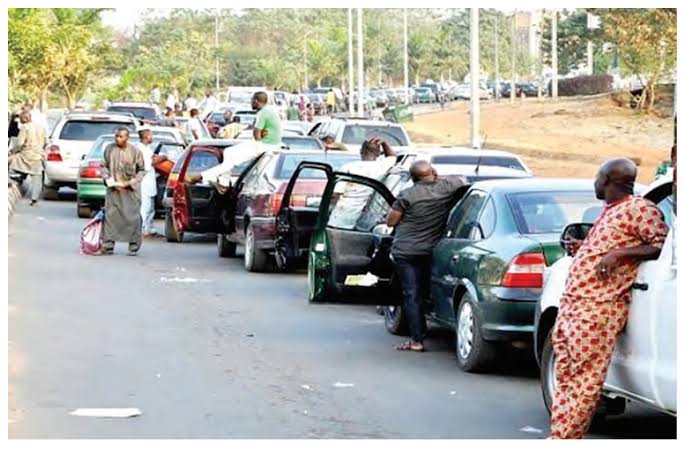
Long queues at compressed natural gas (CNG) filling stations are frustrating motorists who switched from petrol in search of cheaper fuel, raising questions about the capacity of Nigeria’s alternative-fuel infrastructure to meet growing demand.
According to a report by The PUNCH, some drivers are spending hours waiting to refuel, with queues reportedly extending into the night at certain stations.
The situation is emerging as a challenge for the Federal Government’s efforts to promote CNG as a more affordable alternative following the removal of the petrol subsidy.
With petrol prices reported in the supplied account at between ₦1,350 and ₦1,400 per litre, some motorists, particularly commercial drivers, have converted their vehicles to run on CNG in an effort to reduce operating costs.
However, the savings from cheaper fuel can be undermined when drivers lose several hours waiting to refuel, especially where their daily earnings depend on completing multiple trips.
Queues reported at Ibafo station
Findings cited by The PUNCH indicated that motorists using the NIPCO CNG station in Ibafo, Ogun State, sometimes remain in queues overnight.
The report said that, around 11 p.m. on weekdays, queues could extend onto the Lagos-Ibadan Expressway, creating an obstruction for motorists travelling from Lagos towards Mowe.
Such congestion raises concerns beyond the inconvenience of refuelling. Queues spilling onto a major highway can disrupt traffic and potentially expose motorists to additional safety risks.
The report also indicated that some passengers were becoming reluctant to use CNG-powered buses because of the possibility of prolonged delays while drivers refuel.
For commercial transport operators, the issue is particularly significant because time spent at filling stations can reduce the number of trips completed in a day, affecting revenue and the availability of vehicles to passengers.
Infrastructure must keep pace with adoption
CNG has been promoted in Nigeria as one option for reducing transport costs and expanding the use of domestic natural gas.
But wider adoption requires more than vehicle conversion. It also depends on sufficient refuelling stations, reliable gas supply, appropriate distribution infrastructure and effective management of demand.
Where refuelling capacity fails to keep pace with the number of converted vehicles, motorists may experience congestion that erodes some of the practical benefits of switching fuels.
The experience reported in Ibafo highlights the need to align vehicle-conversion programmes with investments in refuelling infrastructure, particularly along busy transport corridors.
It also underscores the importance of ensuring that stations can serve commercial fleets without creating long queues that disrupt public roads.
The supplied report did not provide nationwide data on CNG station capacity, average waiting times or the number of motorists affected. The scale of the problem beyond the locations cited therefore remains unclear.
Nevertheless, reducing refuelling delays will be important if CNG is to become a dependable and convenient option for motorists seeking relief from high petrol costs.