Nigeria’s private sector recorded another month of expansion in October 2026, with the country’s composite Purchasing Managers’ Index (PMI) rising to 53.2 points from 53.0 points in September.
The latest figures indicate that business activity has remained above the 50-point threshold for the fifth consecutive month, suggesting continued growth across several areas of the economy.
The Purchasing Managers’ Index is an economic indicator used to assess changes in business activity. A reading above 50 points generally indicates expansion, while a reading below 50 suggests contraction.
According to the Central Bank of Nigeria’s October survey, 24 of the 32 subsectors covered recorded expansion.
The performance indicates that the improvement was not restricted to one part of the economy, although some sectors performed better than others.
Agriculture recorded a PMI reading of 54.7 points, while the industrial sector increased to 52.6 points.
The services sector, however, moderated to 52.7 points from 53.2 points in September.
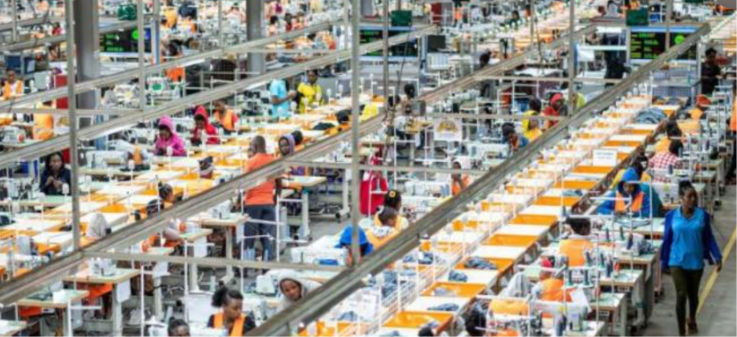
The manufacturing PMI also improved to 52.4 points, supported by stronger activity in cement production, motor vehicle assembly and oil refining.
The improvement in manufacturing activity is particularly important for Nigeria because the sector plays a significant role in employment generation, domestic production and the development of local supply chains.
Increased industrial activity could also help reduce dependence on imported finished products by encouraging local production.
However, the latest figures also reveal continuing challenges for businesses, particularly the rising cost of production.
The Input Price Index increased to 64.0 points, while the Output Price Index reached 58.9 points.
These readings indicate that businesses continued to experience pressure from higher input costs and selling prices.
Input costs include expenses associated with raw materials, transportation, energy, labour and other resources required for production.
When these costs increase, manufacturers and service providers may be forced to raise prices, reduce profit margins or adjust their production levels.
For small and medium-sized businesses, the pressure can be particularly difficult because many operate with limited access to affordable financing.
Rising production costs can also affect consumers through higher prices for goods and services.
The improvement in the PMI therefore presents a mixed picture of Nigeria’s economic performance.
On one hand, continued expansion suggests that businesses are increasing activity and that demand conditions may be improving.
On the other hand, persistent cost pressures could limit the strength of the recovery if companies struggle to maintain profitability.
The agriculture and industrial sectors will remain important to the country’s economic outlook, particularly as Nigeria continues to pursue policies aimed at strengthening domestic production, improving food supply and expanding manufacturing capacity.
The latest survey provides an encouraging indication that economic activity is gradually improving.
However, sustaining the expansion will require more stable operating conditions, improved infrastructure, reliable electricity supply and better access to finance.
Businesses will also need a more predictable policy environment to support long-term investment and expansion.
The coming months will show whether the private sector can maintain its growth momentum while managing the continuing pressure of production costs.