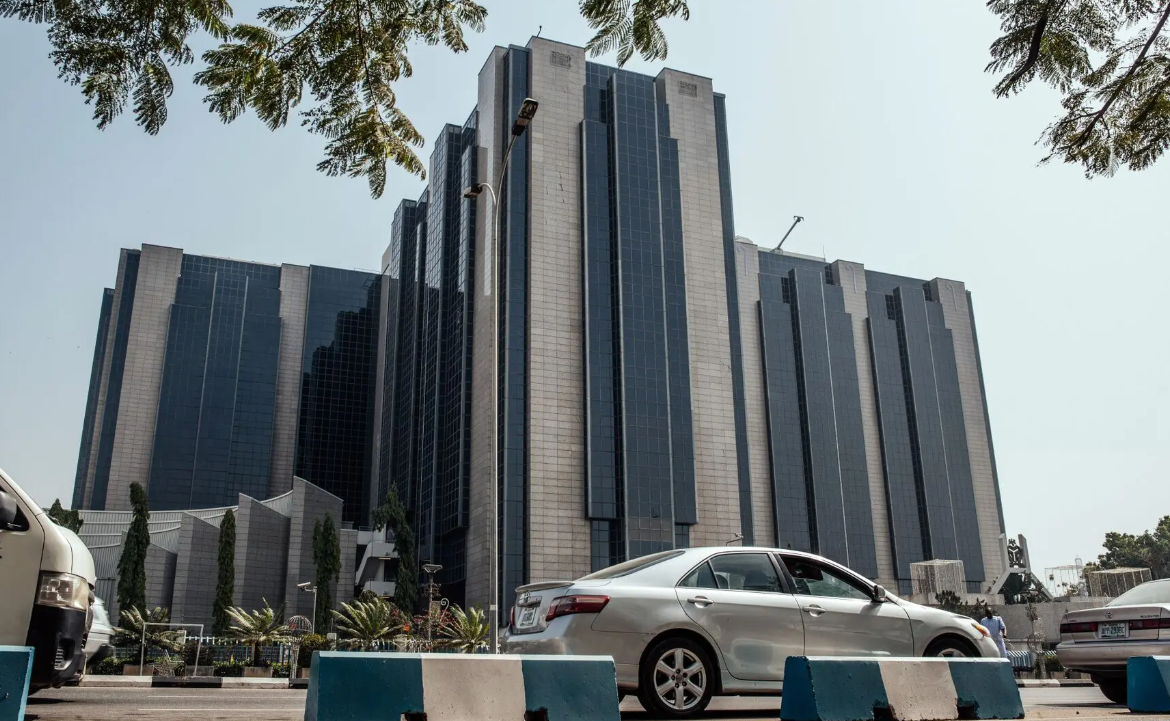
The Central Bank of Nigeria (CBN) has introduced new capital requirements for companies issuing stablecoins and other non-security virtual assets, as the regulator moves to strengthen oversight of the country’s growing digital financial services industry.
Under the new regulations, companies issuing naira-backed stablecoins will be required to maintain minimum paid-up capital of N10 billion, while operators issuing foreign currency-backed stablecoins will need at least N15 billion.
The requirements are contained in the CBN’s Regulations for the Operations of Non-Security Virtual Assets in Nigeria, which were released through a regulatory circular over the weekend.
The new framework also establishes a minimum capital requirement of N1 billion for other virtual asset service providers covered by the regulations.
The development represents an important step in Nigeria’s efforts to establish clearer rules for businesses operating within the digital asset ecosystem.
Stablecoins are digital assets designed to maintain a relatively stable value by being linked to an underlying asset, such as a national currency.
For example, a dollar-backed stablecoin is designed to maintain a value equivalent to one US dollar.
These digital assets are commonly used for digital payments, cryptocurrency trading, transfers and other financial activities.
Unlike cryptocurrencies whose prices can fluctuate significantly, stablecoins are designed to reduce price volatility by maintaining reserves that support their value.
However, the growing use of stablecoins has increased regulatory concerns surrounding customer protection, reserve management, financial stability and the possibility of misuse for illegal transactions.
The CBN’s latest requirements are intended to ensure that companies operating in this sector maintain sufficient financial resources to support their activities.
Under Section 15.2 of the regulations, foreign currency-referenced stablecoin issuers, classified as Class 2 operators, must maintain at least N15 billion in paid-up capital.
Naira-backed stablecoin issuers, classified as Class 1 operators, are required to maintain a minimum of N10 billion.
Other virtual asset service providers are subject to a minimum capital requirement of N1 billion, separate from any additional requirements imposed by the Securities and Exchange Commission or other relevant regulators.
The CBN also stated that it could impose higher capital requirements depending on factors such as transaction volumes, market significance, redemption obligations, technology risks and an operator’s exposure to the financial system.
This means that companies operating on a larger scale or presenting greater risks could face additional financial requirements.
Another important aspect of the regulations concerns the separation of capital from customer funds and reserve assets.
The prescribed capital must be maintained separately from the funds held to support stablecoins in circulation.
It must also be kept in cash in a designated CBN account or in approved Federal Government securities under the regulator’s lien.
This requirement is intended to prevent operators from treating customer reserves as ordinary business funds.
The regulations also establish reserve requirements for stablecoin issuers.
Companies must maintain reserves equivalent to at least 100 per cent of the tokens in circulation, together with an additional two per cent buffer.
Issuers are prohibited from creating new tokens without first receiving corresponding reserve assets.
This provision is important because the credibility of a stablecoin depends heavily on the ability of its issuer to support the tokens and meet valid redemption requests.
The CBN has also introduced rules requiring holders to redeem their stablecoins at face value.
Valid redemption requests must be completed no later than the end of the next business day.
The regulations further prohibit algorithmic stablecoins and fiat-linked tokens backed mainly by other cryptocurrencies.
Algorithmic stablecoins rely primarily on programmed mechanisms and market incentives to maintain their value, rather than conventional reserve arrangements.
The regulator’s restrictions reflect concerns about the risks associated with stablecoins that lack sufficient financial backing.
The framework also provides criteria for identifying systemically important stablecoins.
A stablecoin may be classified as systemically important if its circulating value exceeds N500 billion for 30 consecutive days or its user base in Nigeria surpasses five million people.
Such classification could result in closer regulatory supervision because problems involving widely used stablecoins could have broader consequences for the financial system.
Foreign currency-backed stablecoins must also be issued through companies incorporated in Nigeria and licensed by the CBN.
Foreign regulatory approvals will not automatically replace the requirement for local authorisation.
Existing operators have 180 days from the commencement of the regulations to apply for the necessary licences.
The framework covers several categories of virtual asset service providers, including exchanges, wallet providers, payment gateways, remittance operators, custodians and peer-to-peer platforms.
These businesses are also expected to comply with applicable anti-money laundering, customer identification and cybersecurity requirements.
For Nigeria’s financial technology industry, the regulations could reshape the operating environment for digital asset companies.
While higher capital requirements may strengthen financial stability and customer confidence, they could also increase the cost of entering the market, particularly for smaller operators.
Companies will need to assess their financial capacity, operational systems and compliance arrangements to determine whether they can meet the new requirements.
The CBN’s move reflects the growing importance of digital assets within modern financial services and the need to ensure that innovation develops within a properly supervised environment.