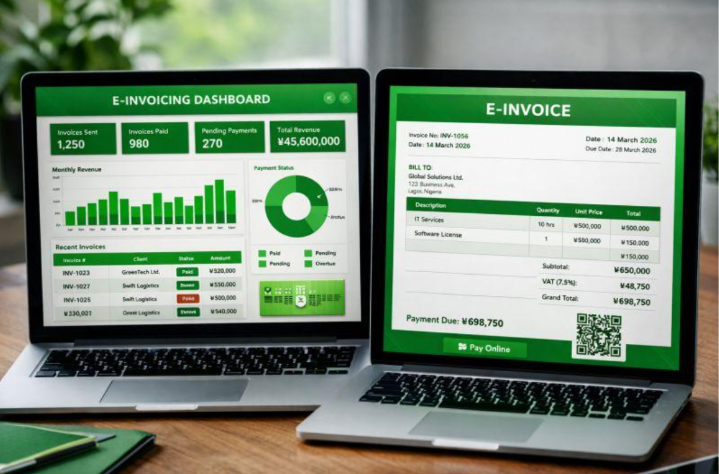
Nigeria generated N33 trillion in government revenue between January and October 2026, with the Federal Government attributing part of the performance to improvements in digital systems and electronic invoicing.
The Minister of Finance and Coordinating Minister of the Economy, Taiwo Oyedele, disclosed the figure on Thursday, November 5, while delivering a convocation lecture at the University of Uyo in Akwa Ibom State.
His address focused on the theme, Digital Sovereignty and Ethics: Guarding the Economy for the Next Generation.
According to information released by the ministry, improved digital systems, including electronic invoicing, contributed to strengthening revenue administration and improving efficiency across public sector operations.
The N33 trillion figure represents government revenue generated during the first ten months of the year, from January to October 2026.
The minister used the development to explain how technology can improve public financial management and support the country’s economic development.
Electronic invoicing, commonly known as e-invoicing, involves the digital creation, transmission and management of invoices between businesses and relevant authorities.
It can help improve the accuracy of financial records, reduce manual processes and make it easier for tax authorities to monitor business transactions.
For governments, digital invoicing systems can strengthen tax administration by providing better access to transaction information.
They can also reduce opportunities for inaccurate reporting and improve the ability of authorities to identify discrepancies in financial records.
Nigeria has been working to strengthen its revenue collection system as the government seeks to reduce dependence on borrowing and improve the management of public finances.
The country’s revenue challenges have been influenced by several factors, including the size of the informal economy, tax compliance difficulties and dependence on revenue from the oil sector.
Improving non-oil revenue collection has therefore become an important part of the government’s broader economic reform agenda.
The N33 trillion figure highlights the potential contribution of technology to revenue mobilisation.
However, it is important to distinguish between total government revenue and tax revenue collected through a particular agency.
The disclosed amount represents government revenue, and the minister’s statement identifies digital systems as one of the contributing factors rather than the only source of the increase.
During his lecture, Oyedele also discussed the importance of data as a strategic national asset.
He warned that Nigeria could lose economic value if it remains primarily a consumer of digital technologies developed elsewhere while the data generated by its citizens is processed and monetised outside the country.
Data has become increasingly important to modern economies because it supports decision-making, business development, financial services and public administration.
Information generated through digital payments, healthcare services, education, telecommunications and commercial transactions can support economic planning when properly managed.
The minister also referred to figures from the Nigerian Communications Commission indicating that Nigeria had more than 157 million active internet subscriptions as of May 2026.
The figure demonstrates the scale of digital activity taking place across the country.
As more individuals and businesses use digital services, the volume of information available to support economic planning and commercial activities continues to expand.
However, the economic benefits of digitalisation depend on the ability of the country to develop reliable infrastructure and protect sensitive information.
Nigeria must also address concerns involving cybersecurity, data privacy, digital literacy and unequal access to technology.
For businesses, the expansion of electronic invoicing and digital tax administration could create both opportunities and compliance responsibilities.
Companies may benefit from faster record management and more efficient financial processes.
At the same time, they will need to maintain accurate transaction records and ensure that their accounting systems comply with relevant regulatory requirements.
Small businesses could require additional support to adopt digital systems, particularly where access to reliable internet services and suitable technology remains limited.
The government will also need to ensure that digital tax administration does not create unnecessary difficulties for legitimate businesses.
A transparent and efficient revenue system is important for building confidence between taxpayers and public institutions.
The N33 trillion revenue performance therefore provides an opportunity to examine the role of digital technology in strengthening Nigeria’s public finances.
For the government, the next challenge will be ensuring that improved revenue collection translates into better infrastructure, public services and economic opportunities.
Increased revenue alone does not guarantee economic development. The effectiveness of public spending and accountability in the management of government resources will remain equally important.
As Nigeria continues to expand its digital infrastructure, electronic invoicing and other technology-driven systems could become increasingly important tools for improving revenue administration and supporting long-term economic stability.