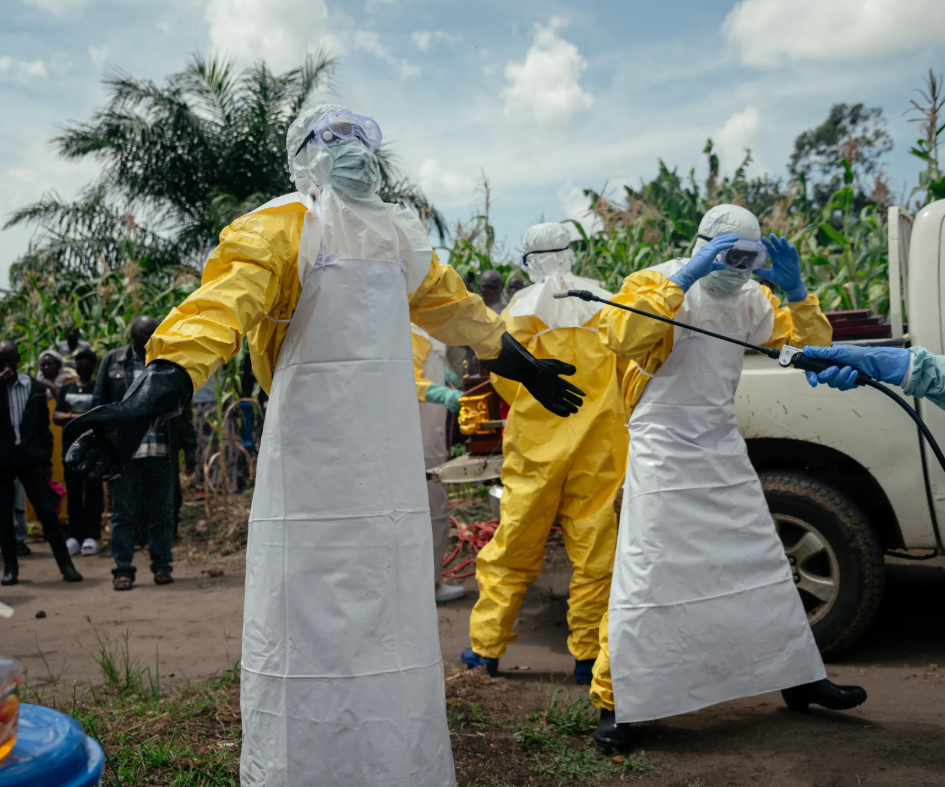
The Democratic Republic of the Congo is facing a serious public health challenge as its ongoing Ebola outbreak continues to spread, with confirmed infections and deaths rising across several provinces.
The outbreak, caused by the Bundibugyo virus, has recorded more than 11,000 confirmed cases and 5,500 deaths, making it one of the largest Ebola outbreaks ever documented.
According to the European Centre for Disease Prevention and Control (ECDC), the country had recorded 11,376 confirmed cases and 5,568 related deaths as of November 15, 2026, using data available through November 14.
The outbreak has affected eight provinces, including Ituri, North Kivu, South Kivu, Tshopo, Haut-Uélé, Bas-Uélé, South Ubangi and North Ubangi.
Health authorities have continued to monitor the situation as infections spread beyond some of the areas initially affected.
The latest figures indicate that the outbreak remains a major challenge for the country’s healthcare system, particularly in communities where access to medical facilities and emergency services is limited.
The Bundibugyo virus belongs to the Ebola virus group and can cause severe illness in infected individuals.
Symptoms may include fever, weakness, headache, muscle pain, vomiting, diarrhoea and, in severe cases, internal and external bleeding.
Transmission generally occurs through direct contact with the blood or bodily fluids of an infected person, or contaminated materials.
The World Health Organization and other public health organisations have continued to support efforts aimed at identifying infections, tracing contacts and improving infection prevention measures.
However, containing the outbreak has been complicated by several challenges.
According to Reuters, insecurity in affected communities has disrupted some response activities, while attacks on health workers and surveillance teams have made it difficult to maintain consistent disease monitoring.
Shortages of medical supplies and problems coordinating emergency activities have also affected the response.
Some healthcare workers have reportedly gone on strike over working conditions and unpaid salaries, further complicating efforts to strengthen medical services.
Funding has also emerged as a major concern.
Reuters reported that approximately $2.9 billion had been pledged towards the response, but less than half of the amount had been disbursed.
The funding gap has raised concerns about the ability of health authorities and humanitarian organisations to sustain emergency operations over an extended period.
Children have also been heavily affected by the outbreak.
According to information cited by UNICEF in the ECDC update, 2,959 children were among confirmed cases as of November 4, representing approximately 28 per cent of the total confirmed cases at that reporting point.
The figures also showed that 1,737 children had died.
The situation highlights the vulnerability of children and other high-risk groups during infectious disease outbreaks, particularly in communities with limited access to healthcare.
The outbreak has also attracted attention from other African countries because of the possibility of cross-border transmission.
Nigeria previously reported an Ebola case involving an individual with travel history to Uganda. However, the person was discharged from hospital on November 11, while all 62 identified contacts in Nigeria completed their monitoring without secondary transmission being reported.
Kenya also reported nine confirmed cases, including two deaths, linked to its first reported case. According to the ECDC, the country had recorded no new cases since October 20, with identified contacts completing monitoring.
These developments demonstrate the importance of regional cooperation and effective disease surveillance.
African countries need to strengthen border health monitoring, laboratory testing and emergency communication systems to identify potential infections early.
The outbreak also raises broader questions about healthcare investment and the ability of countries to respond to major public health emergencies.
For the Democratic Republic of the Congo, containing the outbreak will require sustained financial support, improved security for healthcare workers and stronger coordination between national and international health agencies.
Although emergency response activities are continuing, the rising number of infections and deaths shows that the situation remains serious.
Health authorities will need to maintain surveillance, strengthen community awareness and ensure that affected individuals receive timely medical attention.
The continuing outbreak serves as a reminder that infectious diseases remain a major threat to public health and economic stability across Africa.