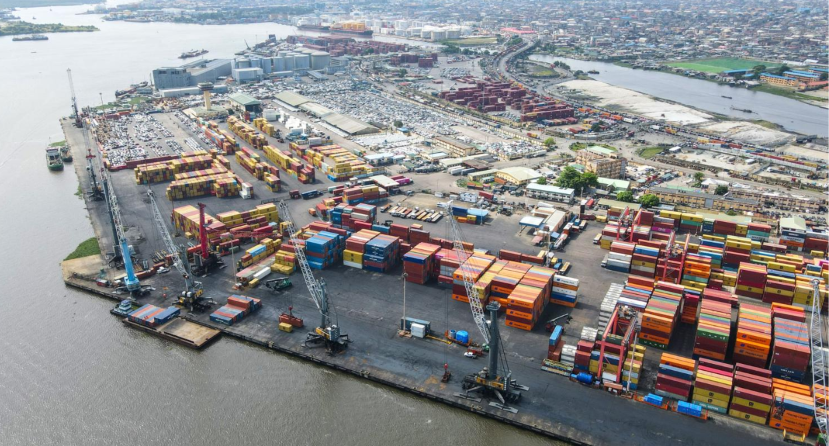
The Federal Government of Nigeria has announced plans to commence the modernisation and rehabilitation of the Lagos Port Complex, Apapa, and the Tin-Can Island Port Complex on November 25, 2026, as part of efforts to improve the country’s maritime infrastructure.
The Minister of Marine and Blue Economy, Adegboyega Oyetola, is expected to perform the groundbreaking ceremony for the projects, which are aimed at addressing longstanding infrastructure challenges at the two major seaports.
The announcement was contained in a statement issued by the minister’s Special Adviser, Bolaji Akinola, according to Channels Television.
The modernisation initiative represents an important development for Nigeria’s maritime sector because Apapa and Tin-Can Island remain two of the country’s most important gateways for international trade.
Together, the ports reportedly handle more than 70 per cent of Nigeria’s non-oil export cargo, making them essential to the movement of goods between Nigerian businesses and international markets.
However, both facilities have experienced infrastructure and operational challenges over the years.
Ageing equipment, congestion, limited cargo-handling capacity and difficulties associated with port access have contributed to delays and increased operating costs for businesses.
The government believes that modernising the facilities will help address these problems and improve the efficiency of port operations.
According to the ministry’s announcement, the projects are expected to increase cargo-handling capacity, reduce vessel turnaround time and shorten the period cargo spends at the ports.
The intervention is also expected to improve port access, logistics operations, safety and security.
For importers and exporters, improvements in these areas could reduce some of the costs associated with moving goods through Nigerian ports.
Long delays at seaports can increase shipping expenses, storage charges and the overall cost of doing business.
These additional costs may eventually affect the prices of imported products and reduce the competitiveness of locally manufactured goods in international markets.
The government has therefore linked the modernisation programme to its broader economic diversification strategy, particularly efforts to increase non-oil exports and strengthen local industries.
Nigeria has continued to explore ways of reducing its dependence on crude oil revenue by expanding agriculture, manufacturing, solid minerals and other productive sectors.
An efficient maritime system is considered important to achieving these objectives because businesses depend on reliable transportation networks to move raw materials, finished products and industrial equipment.
The Federal Government has also indicated that the modernisation programme will not be limited to the two Lagos ports.
According to the announcement, approval has also been granted for the modernisation of four other major seaports outside Lagos.
These include Warri, Onne, Calabar and Rivers ports.
The plan is intended to promote a more balanced distribution of maritime activities across different regions of Nigeria rather than concentrating most international cargo operations around Lagos.
Another important aspect of the programme is the proposed integration of seaports with road networks, rail transportation, inland waterways and dry ports.
This multimodal transportation approach is expected to improve the movement of goods from production centres to ports and onward to domestic and international markets.
Better connections between transportation systems could help reduce pressure on major roads and improve the movement of cargo across the country.
The modernisation programme is also connected to Nigeria’s wider efforts to attract private investment into the maritime sector.
A more efficient port system could improve confidence among shipping companies, terminal operators, manufacturers and international investors.
The Federal Government previously secured a £746 million export finance agreement with the United Kingdom in March 2026 to support the modernisation of the Lagos port facilities.
The latest announcement therefore represents a significant step towards implementing the broader infrastructure programme.
Nevertheless, the success of the projects will depend on effective execution, proper funding, transparency and cooperation between relevant government agencies and private-sector operators.
Stakeholders will also be watching to see whether the planned improvements translate into shorter cargo clearance times and lower operating costs.
For Nigeria, modernising Apapa and Tin-Can Island ports is more than an infrastructure project. It is an important part of improving the country’s trade competitiveness and strengthening its position as a major maritime centre in West Africa.
If properly implemented, the initiative could support businesses, improve export performance and contribute to economic growth.