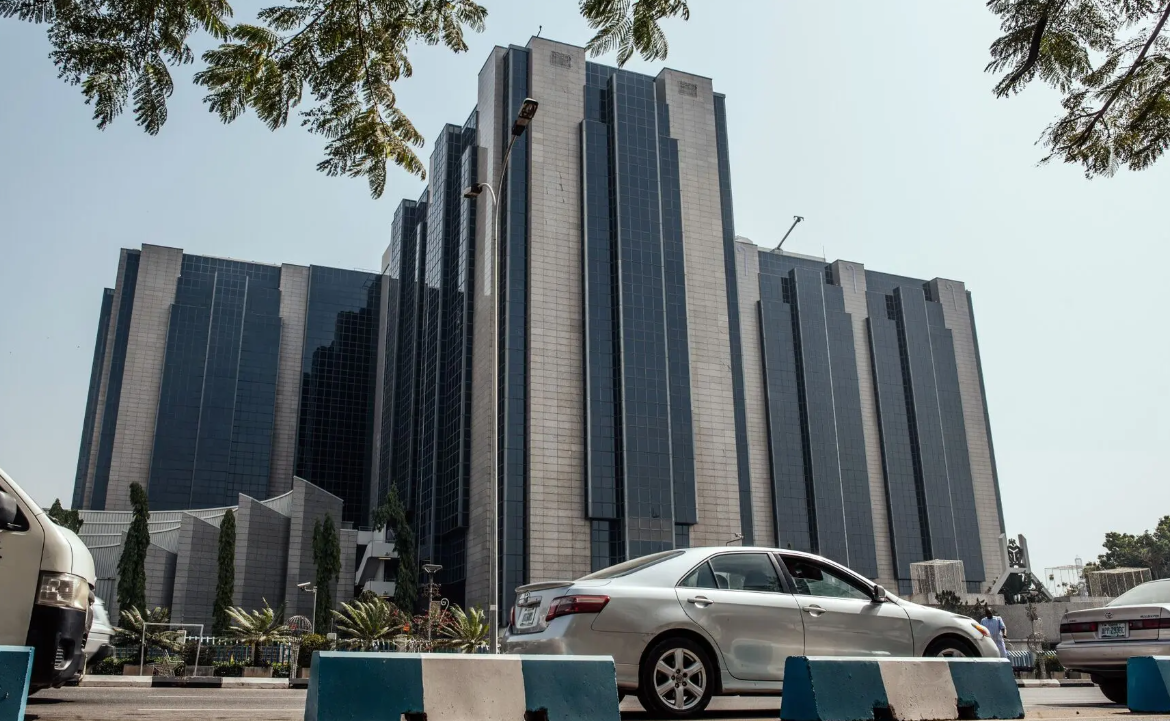
The Central Bank of Nigeria (CBN) has commenced its 308th Monetary Policy Committee (MPC) meeting in Abuja, with investors, financial institutions and businesses closely monitoring developments ahead of the committee’s latest interest rate decision.
The two-day meeting, scheduled for November 23 and 24, comes at a critical period for Nigeria’s economy as policymakers continue efforts to control inflation, maintain exchange-rate stability and strengthen confidence in the financial system.
The committee is expected to review developments in the domestic and international economies before announcing its decision on the Monetary Policy Rate (MPR), which currently stands at 23 per cent.
The meeting follows the committee’s September decision to reduce the benchmark interest rate from 26.5 per cent to 23 per cent, representing a reduction of 350 basis points.
That decision was viewed as an important shift in the central bank’s monetary policy direction after an extended period of tight monetary conditions.
However, the latest economic indicators present policymakers with a difficult balancing act. Although headline inflation has continued to decline, concerns remain about monthly price movements, exchange-rate pressures and the possible impact of increased government spending.
According to October inflation figures released by the National Bureau of Statistics, Nigeria’s headline inflation declined to 14.06 per cent from 14.63 per cent in September.
The decline represents an improvement in the country’s inflation outlook and could provide some support for arguments favouring further monetary easing.
Nevertheless, the monthly inflation figure increased to 0.43 per cent in October from 0.06 per cent in September, indicating that price pressures have not completely disappeared.
This difference between annual and monthly inflation figures remains important because it provides policymakers with a broader understanding of how prices are changing.
Businesses are particularly interested in the committee’s decision because interest rates influence the cost of borrowing, access to credit and investment decisions.
A reduction in the benchmark rate could eventually support lower borrowing costs, although the effect on commercial lending rates would depend on how financial institutions respond.
Manufacturers, small businesses and other private-sector operators have continued to face financing challenges associated with expensive credit, high operating costs and unstable economic conditions.
For banks, the MPC decision will also influence liquidity management, lending strategies and the returns available on interest-sensitive financial products.
Meanwhile, investors in the fixed-income market are monitoring the meeting because changes in monetary policy can affect government securities, treasury bills and other investment instruments.
Analysts have pointed to election-related spending, money supply growth and pressure on the naira as factors that could encourage the CBN to maintain its current policy rate.
The committee must therefore consider whether the improvement in annual inflation is strong enough to justify another reduction or whether maintaining the existing rate would provide greater economic stability.
The CBN’s policy direction is also important for foreign investors, who monitor monetary conditions when assessing the attractiveness of Nigerian financial assets.
A predictable monetary policy environment could strengthen confidence, while uncertainty surrounding inflation and the exchange rate could affect investment decisions.
As the meeting continues, attention will remain on the committee’s final statement and its assessment of inflation, economic growth, exchange-rate developments and financial-system stability.
The outcome will provide an indication of how the central bank intends to balance economic growth with its responsibility to maintain price stability.
The decision is expected after the committee concludes its deliberations on November 24.