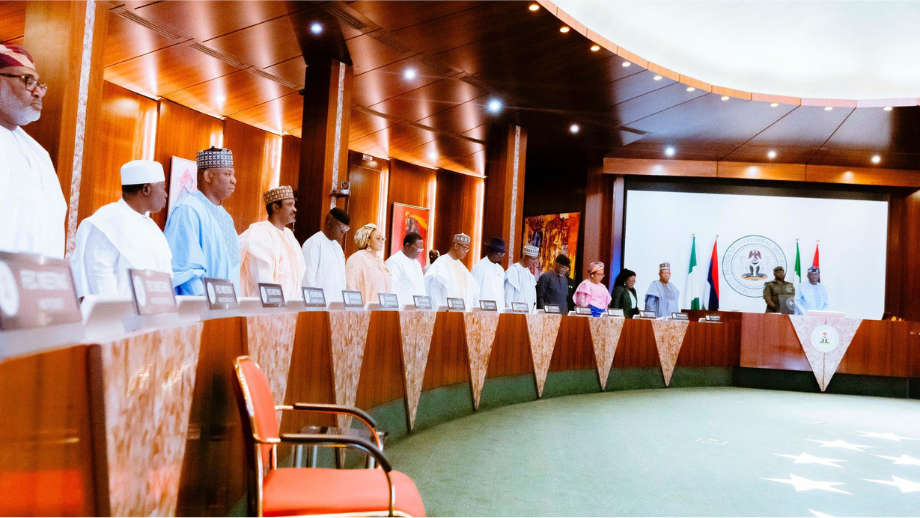
The Federation Account Allocation Committee (FAAC) has shared ₦2.441 trillion among the Federal Government, state governments and local government councils as revenue allocation for October 2026.
The amount was distributed from gross revenue of ₦3.812 trillion, according to a statement issued by the Federal Ministry of Finance following the November FAAC meeting held in Abuja on November 18.
The meeting was chaired by the Minister of Finance and Coordinating Minister of the Economy, Taiwo Oyedele.
Of the total distributable revenue, the Federal Government received ₦856.065 billion, while the 36 state governments shared ₦809.909 billion. Local government councils received ₦568.701 billion, while oil-producing states were allocated ₦206.384 billion as 13 per cent derivation revenue.
The communiqué showed that gross statutory revenue for October stood at ₦2.999 trillion, representing a decline of ₦97.323 billion compared with the ₦3.097 trillion recorded in September.
After deductions for collection costs, transfers, refunds and savings, net statutory revenue available for distribution stood at ₦1.689 trillion.
Value Added Tax revenue also declined marginally to ₦812.446 billion from ₦816.872 billion in September.
After collection costs, transfers, refunds and savings, the net distributable VAT revenue stood at ₦752.488 billion. From this amount, the Federal Government received ₦75.249 billion, state governments received ₦413.868 billion, while local government councils received ₦263.371 billion.
The committee also reported marginal increases in revenue from excise duty and Customs and Excise Tariff levies.
However, receipts from several other sources, including petroleum profit tax and hydrocarbon tax, petroleum royalties, import duty, companies income tax, capital gains tax, stamp duties, VAT and mineral royalties, recorded declines.
The latest allocation provides another round of funding for the three tiers of government amid continuing pressure to meet recurrent obligations, invest in infrastructure and deliver public services.
The distribution also highlights the importance of strengthening revenue collection and reducing the volatility associated with statutory and consumption-based revenue sources.
For state and local governments, the ability to translate monthly allocations into improved infrastructure and social services will remain central to the impact of the funds on citizens.