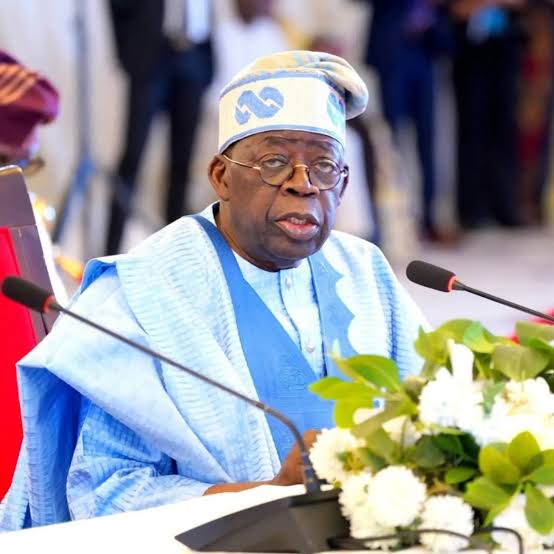
President Bola Tinubu’s request to reduce Nigeria’s 2026 budget by N3.15 trillion has renewed concerns over the country’s fiscal management framework, particularly as the proposed expenditure cut leaves the government’s deficit and borrowing projections unchanged.
The President has asked the National Assembly to amend the 2026 Appropriation Act, reducing the total budget from N68.323 trillion to N65.176 trillion.
However, under the revised proposal, the fiscal deficit would remain at N31.457 trillion, while planned borrowing would be retained at N29.218 trillion, raising questions about how the Federal Government intends to finance its expenditure programme following the reduction in projected spending.
The proposed deficit represents 5.64 per cent of Nigeria’s gross domestic product (GDP), a level that is 2.67 percentage points above the threshold permitted under the Fiscal Responsibility Act.
The request has also drawn attention to broader challenges in Nigeria’s budget cycle, with the 2025 capital budget still being implemented, the 2027 Appropriation Bill yet to be presented and the 2027–2029 Medium-Term Expenditure Framework and Fiscal Strategy Paper still awaiting legislative consideration.
The overlap means that three successive budget cycles are at different stages of implementation and preparation, creating concerns about planning consistency, expenditure control and the ability of government institutions to monitor public spending effectively.
The timing of the proposed amendment has further raised questions, as the 2026 budget has only about five weeks remaining before the end of its statutory validity.
Fiscal policy analysts and other stakeholders are likely to seek clarification on the assumptions behind the revised expenditure plan, particularly why a reduction of N3.147 trillion in total spending has not resulted in a corresponding adjustment to the projected deficit and borrowing requirement.
Ordinarily, a reduction in planned expenditure could help moderate a budget deficit if revenue projections and other financing assumptions remain unchanged. However, the retention of the existing deficit and borrowing figures suggests that the government’s revised fiscal calculations may involve adjustments to other components of the budget.
The details of those adjustments will be important in assessing the implications of the proposal for public debt, government cash flow and the implementation of priority projects.
The development also highlights the importance of synchronising budget preparation, legislative approval and implementation to strengthen fiscal discipline and accountability.
With the Federal Government continuing to rely on borrowing to finance a substantial portion of its expenditure, the National Assembly’s consideration of the proposed amendment is expected to bring renewed attention to the country’s deficit management strategy and the credibility of its fiscal projections.
The challenge for the government will be to explain how the revised budget will be implemented without increasing financing pressures, while ensuring that critical public projects and services are not undermined by the adjustment.