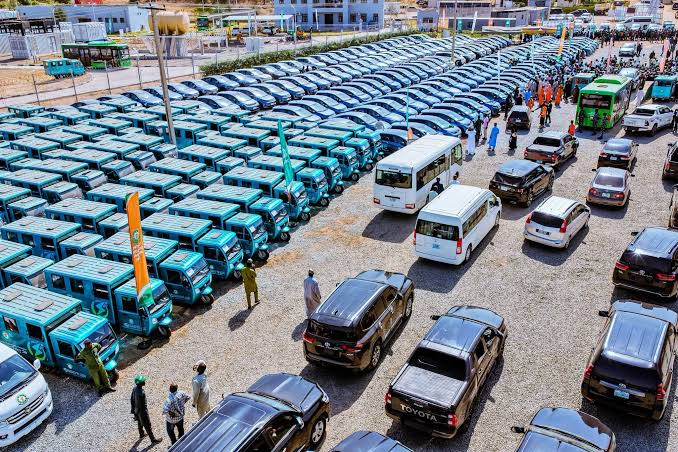
The Federal Government has unveiled a major development initiative for Nigeria’s North-East, featuring the deployment of 10,000 electric vehicles and the development of a 50-megawatt solar-powered mini-grid programme as part of efforts to accelerate economic recovery and improve living conditions across the region.
The interventions, being implemented by the North-East Development Commission (NEDC), form part of a broader multi-sectoral development programme covering transportation, renewable energy, infrastructure, housing, education, healthcare, agriculture and humanitarian support.
The initiative will cover the six states of Adamawa, Bauchi, Borno, Gombe, Taraba and Yobe, which have experienced years of insurgency, displacement, economic disruption and infrastructure damage.
Unveiling the programmes, Vice President Kashim Shettima commended residents of the region for their resilience despite prolonged insecurity and economic hardship.
He said the Federal Government remained committed to rebuilding affected communities, restoring livelihoods and creating sustainable economic opportunities through targeted development interventions.
According to the Vice President, the recovery of the North-East must go beyond addressing the immediate consequences of insurgency to include long-term economic renewal, infrastructure expansion and improvements in the standard of living.
The planned deployment of 10,000 electric vehicles is expected to introduce additional transport capacity while supporting the development of cleaner mobility solutions in the region.
The 50MW solar mini-grid programme, meanwhile, is intended to expand access to electricity through renewable energy infrastructure, particularly in communities where reliable power supply remains a challenge.
Access to dependable electricity is critical to the recovery of businesses, healthcare facilities, schools, agricultural processing activities and other essential services. Solar-powered mini-grids can also provide an alternative to conventional electricity supply in communities that are underserved by the national grid.
The NEDC’s wider intervention also places emphasis on rebuilding social infrastructure and strengthening the economic foundations of communities affected by years of conflict.
Investments in housing, education and healthcare are expected to complement the transportation and energy components, while agricultural support could help improve livelihoods and strengthen local food production.
The programme reflects a broader development approach that links post-conflict recovery with infrastructure investment, private-sector activity and improved access to public services.
However, the effectiveness of the initiative will depend on implementation, funding, maintenance arrangements and the ability of relevant institutions to ensure that the projects deliver lasting benefits across the six states.
For the North-East, the challenge extends beyond the provision of new infrastructure to creating an environment in which residents can return to productive economic activities, businesses can operate sustainably and communities can rebuild after years of disruption.