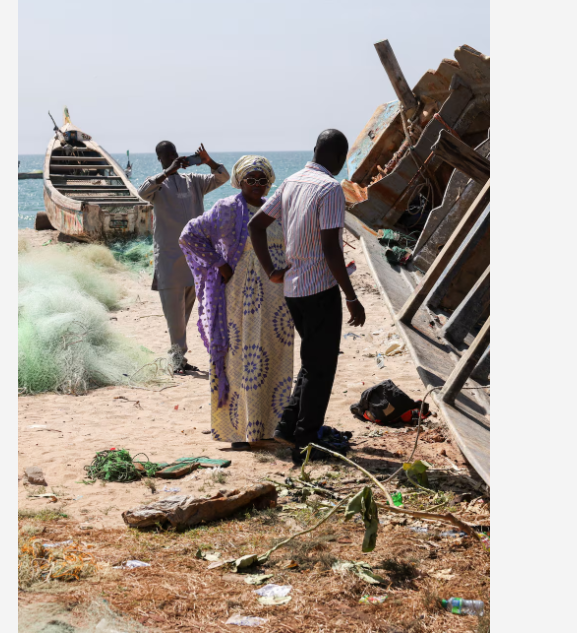
Concerns are growing in Senegal after about 175 migrants were reported missing following the disappearance of a wooden boat travelling towards Europe.
The boat, known locally as a pirogue, reportedly departed from the Yoff district of Dakar around November 9 or 10. It was believed to be carrying people hoping to reach Europe through the dangerous Atlantic migration route.
Relatives and community members have been left waiting for information after contact with the vessel was lost.
The number of people believed to be missing differs slightly between sources. Dakar’s Yoff mayor estimated that approximately 175 people were aboard, while the human rights organisation Action for Human Rights and Friendship put the number at about 172.
The difference has not changed the central concern: a large group of people may be missing at sea, and families are demanding stronger efforts to establish what happened.
Calls for stronger search operations
The disappearance has renewed calls for search-and-rescue operations to be intensified.
Action for Human Rights and Friendship has urged authorities to continue efforts to locate the missing passengers and provide information to their families.
The Senegalese navy has been involved in wider operations targeting irregular migration by sea. Reuters reported that the navy rescued 974 migrants from five pirogues on Monday, while more than 5,200 people had been rescued, intercepted or prevented from departing Senegal since early November.
These figures show the scale of maritime migration activity along the country’s coast.
However, the disappearance of the Yoff boat demonstrates the difficulty of monitoring every vessel once it enters open waters.
Small wooden boats are particularly vulnerable to rough seas, mechanical problems, overcrowding and shortages of food and drinking water. When communication equipment fails or a vessel travels far from established shipping routes, locating it can become extremely difficult.
The dangerous Atlantic route
The Atlantic route from West Africa towards Spain’s Canary Islands remains one of the most dangerous migration journeys in the world.
Migrants often travel in overcrowded wooden boats operated by smugglers or informal organisers. Some vessels are poorly equipped for long journeys and may lack adequate navigation systems, safety equipment and supplies.
People undertaking these journeys are often driven by unemployment, insecurity, poverty and the hope of finding better economic opportunities abroad.
The risks, however, are severe. A boat can spend several days at sea, and even a relatively small technical problem can become life-threatening when passengers are far from land.
The United Nations refugee agency reported more than 8,000 arrivals in the Canary Islands during the first 12 days of November, according to figures cited by Reuters.
The number of people attempting the journey continues to place pressure on maritime rescue services and governments along the West African coast.
Families demand answers
For the relatives of those aboard the missing boat, the immediate concern is finding out whether their loved ones are alive.
Families of missing migrants often face uncertainty because they may not know the exact route taken, the identity of the vessel’s organisers or the last location where the boat was seen.
This makes it difficult to obtain reliable information and can delay efforts to identify survivors.
Human rights organisations have repeatedly called for safer migration policies, improved rescue coordination and stronger action against criminal networks that exploit vulnerable people.
A wider regional challenge
The incident is not only a Senegalese concern. Migration across the Atlantic involves several West African countries, European destinations and international maritime agencies.
Governments face the challenge of preventing dangerous departures while also addressing the economic and security conditions that push people to leave.
Rescue operations remain essential, but long-term solutions also require employment opportunities, improved public services and safer legal migration pathways.
Until more information becomes available, the fate of the passengers remains uncertain. The disappearance is another reminder of the human cost of dangerous sea journeys and the urgent need to protect people travelling across the Atlantic.