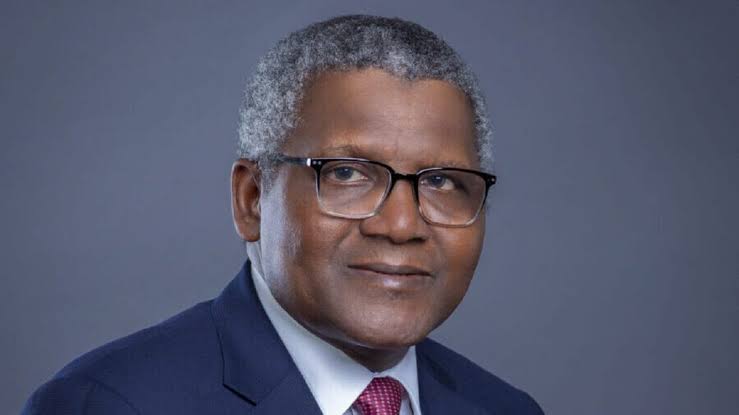
The Aliko Dangote, President of the Dangote Group, has announced ambitious plans to expand the conglomerate into steel manufacturing, electricity generation, and port infrastructure, aiming to accelerate industrialisation across Africa.
Dangote, whose business interests currently span cement, sugar, salt, fertiliser, and petrochemicals, emphasised that Africa must move beyond commodity exports to develop a robust manufacturing base capable of competing globally. “We have to industrialise Africa,” he said, noting that refining petroleum is only one phase of a broader vision to transform the continent’s economic architecture.
The group’s flagship project, the Dangote Petroleum Refinery & Petrochemicals, currently produces around 650,000 barrels of refined products daily, with output expected to double within the next three years. However, Dangote stressed that the refinery is merely a foundation for further expansion into critical sectors such as steel, power, and ports — essential pillars of industrial economies.
Analysts say venturing into steel would position the group at the centre of infrastructure development, construction, and heavy manufacturing, providing critical inputs for roads, bridges, rail systems, and housing. Investments in electricity generation and port facilities are expected to alleviate structural constraints that have historically hampered Nigeria’s industrial growth, including unstable power supply and congested ports.
Citing India’s Tata Group as a model, Dangote highlighted how diversified industrial enterprises can reshape emerging economies and drive sustainable growth.
Job creation remains central to Dangote’s strategy. With Nigeria projected to require 40 to 50 million new jobs by 2030, he argued that large-scale industrial projects are necessary to absorb the growing workforce. The refinery alone employs about 30,000 workers, roughly 80 percent of whom are Nigerians, and expansion into steel, power, and ports is expected to raise total employment within the group to around 65,000.
Dangote also revealed plans to list shares of the refinery on the Nigerian Stock Exchange, allowing local investors to participate in the asset and broaden ownership.
Despite acknowledging infrastructure gaps and crude supply challenges, Dangote asserted that these obstacles would not derail the group’s long-term strategy. “Nobody dared to do it, so we did it,” he said, reinforcing his belief that bold private investment is crucial to unlocking Africa’s industrial potential.
With operations already spanning multiple African countries, Dangote’s expansion signals a shift from sectoral dominance to integrated industrial leadership — a move designed to anchor Africa’s economic future on manufacturing strength.