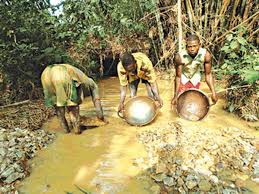
At least 30 miners have been killed after a gold mine collapsed in western Central African Republic, authorities and residents said on Tuesday, August 18, 2026.
The deadly accident happened at an artisanal mining site in the Abba region of Nana-Mambéré prefecture. Rescue workers and local residents spent several hours trying to recover victims from the collapsed site, while concerns remained that other miners could still be trapped.
The disaster has once again drawn attention to the dangerous conditions faced by thousands of people who depend on small-scale mining for their livelihoods across Central African Republic.
According to survivors and local officials, the mine collapsed on Tuesday morning. Rescuers later recovered at least 30 bodies, while injured workers were taken for treatment.
A surviving miner, Florian Gaguende, said there were fears that additional people remained trapped beneath the collapsed ground. However, as time passed, hopes of finding survivors became increasingly limited.
The deputy mayor of the sub-prefecture, Souleymane Bi, appealed for assistance as rescue efforts continued.
Desperate rescue operation
The scenes at the mining site showed the scale of the tragedy.
Footage from the area showed miners and rescue workers covered in mud as they tried to recover victims from the collapsed pit. Dozens of people gathered around the site, while some shouted for help during the difficult operation.
Many of those working at the mine were young men and women who depended on gold mining as a source of income.
Artisanal mining often involves people using basic equipment and manual methods to dig for valuable minerals. Unlike large commercial mining operations, these sites may have limited safety systems, engineering support or emergency equipment.
This can make workers extremely vulnerable when a mine shaft or excavation collapses.
In the Central African Republic, thousands of people depend on small-scale mining to survive. Gold and other natural resources provide an important source of income in communities where employment opportunities can be limited.
However, the work can be extremely dangerous.
Miners may enter deep or unstable pits without enough protective equipment. Heavy rain, unstable soil and weak mine structures can increase the risk of sudden collapses.
Government promises support
Government spokesman Evariste Ngamana expressed sympathy to the families of those who died in the disaster.
He said authorities were working to provide relief and assistance to people affected by the collapse.
The immediate priority remains helping injured miners, recovering anyone who may still be trapped and supporting families who have lost relatives.
For many communities, the death of a miner can have a major economic impact. In some cases, the person working at the mine may be the main source of income for an entire family.
The loss therefore affects not only the victims but also children, spouses, parents and other relatives who depended on their earnings.
Artisanal mining remains dangerous
Mine collapses are not unusual in the region.
Small-scale mining provides employment for large numbers of people, but safety standards can be difficult to enforce. Workers may operate in informal locations where government supervision is limited.
The search for gold can also encourage miners to take risks. When poverty and unemployment are widespread, people may feel they have little choice but to continue working in dangerous conditions.
This creates a difficult situation for authorities.
Mining provides income and supports local economies, but governments also need to improve safety and prevent avoidable deaths.
The latest disaster is likely to increase calls for stronger monitoring of artisanal mining sites and better protection for workers.
Safety measures could include regular inspections, limits on the depth and size of excavations, improved mine support systems and better emergency response plans.
However, introducing and enforcing these measures can be difficult in remote areas.
The human cost of the gold industry
Gold can generate significant wealth, but the people working to extract it do not always benefit from safe working conditions.
At artisanal sites, miners often face the most immediate dangers. They may work for long hours in unstable pits while earning only small amounts of money from the gold they find.
The collapse in Abba is a reminder of the human cost that can be connected to informal mining.
The victims were not simply statistics. They were workers, family members and members of communities who went to the mine expecting to earn a living.
Instead, dozens of families are now mourning.
Search efforts continue
Rescue workers continued searching the site after recovering the first 30 bodies.
Officials have not ruled out the possibility that more victims could be found. The final death toll could therefore change as recovery operations continue.
The dangerous condition of the collapsed site may also make the work of rescuers difficult. Those searching for victims must be careful to avoid further collapses.
Local authorities have appealed for support as they respond to the tragedy.
The incident will also raise wider questions about how artisanal mining can become safer without removing a vital source of income from communities that depend on it.
For now, the focus remains on recovering victims, treating the injured and supporting grieving families.
The gold mine collapse is one of the deadliest mining accidents reported in Central African Republic in recent times. It highlights the urgent need for better safety practices in a sector where thousands of workers continue to face serious risks every day.
As the community waits for news of anyone still missing, the tragedy has left behind a painful reminder that the search for valuable minerals can come at an enormous human cost.